MiniMax H3-Image 实测:一张图转出四面和俯视,侧面比 Qwen Image 2.1 准
2026-11-11 · 模型 MiniMax-H3-Image(Comfy-Org int8 convrot)对 Qwen Image 2.1(int8)· GPU H100 NVL 96 GB · ComfyUI 0.45.0 · 2720×1536 · 评判:Claude Opus 5.5 看图
MiniMax-H3-Image 是 MiniMax 11 月开源的图像生成和编辑模型:把 H3 视频模型的音频分支去掉,33B 的 DiT,蒸馏到 6 步。这次只给一张古风书房图,让它和 Qwen Image 2.1 各生成前、后、左、右、垂直俯视 5 个视角,看换了方向以后,屋里的东西还在不在该在的地方。每个视角每个模型 3 个种子,共 30 张,由 Claude Opus 5.5 对照参考图逐张判定。下面的图都可以点开看大图。同系列:P-H3-Image 实测:做俯视图不如 Qwen Image 2.1。
结论 多视角这件事上,H3-Image 明显更好。5 个视角里,前视和俯视两个模型都满分,后视两个也都能真转 180°。差距在左右侧视:
- H3 的 6 张侧视全对。
- Qwen 的 3 张左视都没转到位:一张根本没换方向,两张只转了约 45°,而且都把书案原地转了 90°。
- Qwen 还有一张右视把罗汉床整组搬到了后墙前,一张后视在南墙上抄了一套后墙的书架和浑仪。
Qwen 出错的方式是“图很好看,但东西换了地方”,拿去当分镜或场景参考会误导人。H3 还快 3.7 倍,同一个视角换种子的结果也更稳定。
- 都稳 俯视(6 张全 5 分):都画成了平面图。后墙和长案在上,窗、茶几、蒲团在左,罗汉床在右,书案在地毯中间、椅子在上方,桌上从左到右的书、笔筒、砚台、卷轴、青瓷瓶,顺序和原图一样。前视是对照组,两个模型都基本复现原图;H3 有一张几乎就是原图,没按要求把镜头放广。
- 都能做 后视(H3 4、5、4;Qwen 4、4、3):6 张都真转过来了。窗和茶几换到右边,罗汉床到左边,前景是背对镜头的椅子,桌上东西的左右顺序整个反过来,南墙编了一排格扇门。共同的小毛病是宫灯被放到书案远端,原图里宫灯比椅子更靠后墙,转过来以后应该离镜头更近。
- 分水岭 左视(H3 5、5、5;Qwen 2、3、3):H3 三张都是站在窗边往东看,罗汉床那面墙正对镜头,后墙的画和长案到了左边,书案短边朝镜头,椅子在左、桌旗在右。Qwen 三张都还能看到格窗(它本该在镜头背后),后墙仍在正面或斜对镜头,和原图的相关度最高到 0.58。
- 差一点 右视(H3 5、5、5;Qwen 5、5、3):格窗和庭院正对镜头,窗前茶几、盆景、蒲团,后墙在右,两个模型大多做对了;Qwen 有一张把罗汉床、小几、挂轴搬到了后墙前。
- 和上一篇对照:P-H3-Image 那篇里,Qwen 的反打只是左右镜像,侧面也转不过去。这次 Qwen 的后视 3 张都真转过去了,右视 3 张有 2 张对,只有左视还是转不到位。这次提示词写明了相机站在哪、哪些东西要左右换边,可能是原因之一,没有单独验证。另外,H3-Image(MiniMax 官方)和 P-H3-Image(PrunaAI 基于 H3 做的)是两个不同的模型。
- 怎么用:拿一张场景图出四面和俯视,用 H3-Image 可以直接用。用 Qwen 出侧面要多抽几张,逐张核对窗、床、书架在哪面墙。
- 局限:
- 只有一张参考图、3 个种子,所有判断都由 Claude Opus 5.5 看图给出(拿不准的地方放大看过),没有人工复核。
- 没开官方的提示词扩写。
- H3 用的是 4 MP,没测它推荐的 16 MP。
- 参考图本身正面对称、四面墙信息不全,后墙南面和侧墙看不到的部分只能靠模型编,这里只判断编得合不合理。
一图看懂
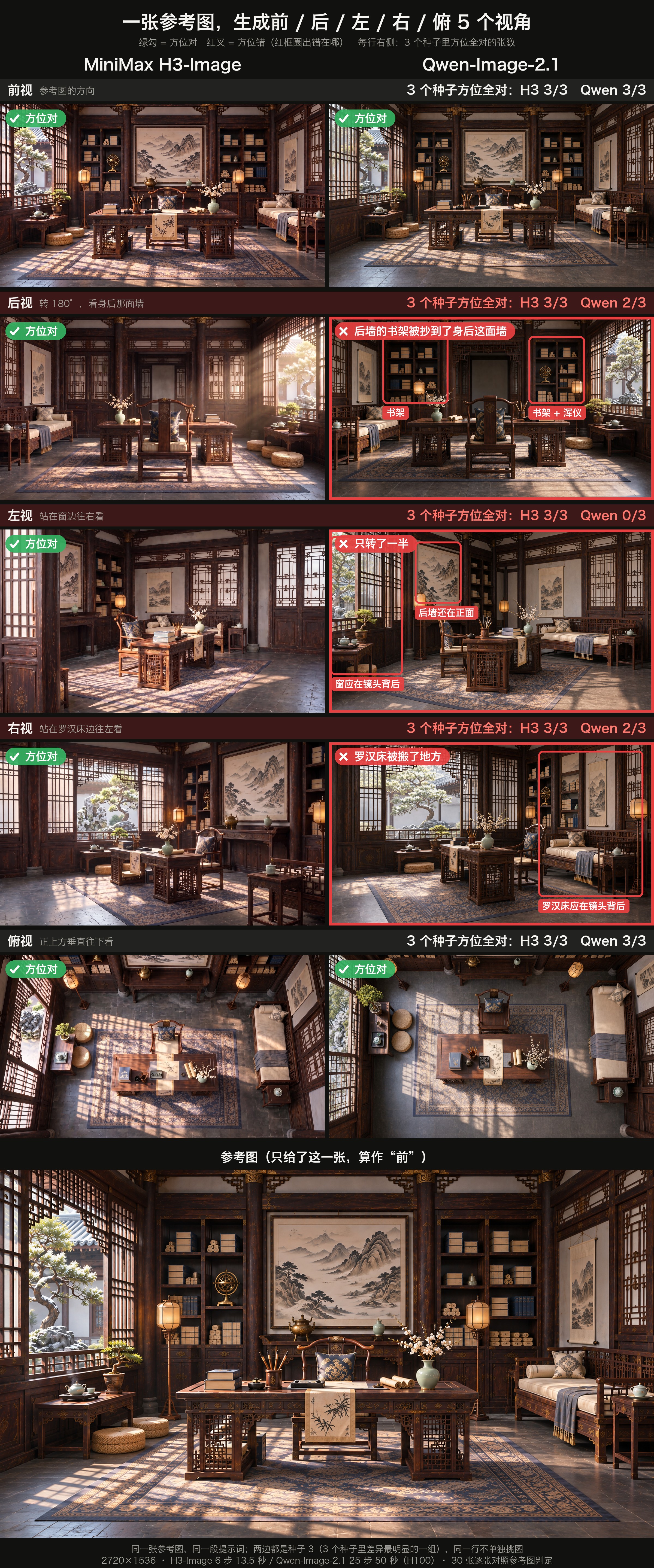
- 布局:左列 H3-Image,右列 Qwen-Image-2.1,底部是参考图。
- 每行标题:3 个种子里方位全对的张数,有差距的行标红。
- 图上标记:绿勾 = 方位对;红叉加红框 = 方位错,红圈标出错在哪。
- 选图:两边都是种子 3(3 个种子里差异最明显的一组),同一行不单独挑图。
- 点图看原尺寸(2400 宽)。
怎么测的
- 参考图:一张古风书房图(1671×941),两边喂同一张。照 H3 官方编辑模板的做法,先用 Lanczos 放大到 2720×1536,输出也都是 2720×1536。
- 视角定义:参考图就是“前”,站在南边往北看。左视 = 站在西边窗前往东看,右视 = 站在东边罗汉床旁往西看(制图里的左视、右视)。俯视 = 正上方垂直往下看。
- 提示词:只交代机位、哪面墙正对镜头、哪些东西左右换边,道具用泛称,外观从参考图继承。给 H3 写
<Picture 1>,给 Qwen 换成the reference image。原文在页尾。 - 裁判:
- 先列出参考图里认得出的 19 样东西,再写清每个视角理论上该看到哪些、方位该怎样。
- 每张逐项对照:一致记 1,走样记 0.5,缺或错记 0。
- 另记视角做到没有、方位对不对,打 1~5 分。5 = 像同一间屋子在这个位置拍的照片;3 = 认得出,但方位错一处;2 = 视角没做到。
- 拿不准的地方都放大看过,比如后视里的椅子是不是背对镜头(6 张都对)。
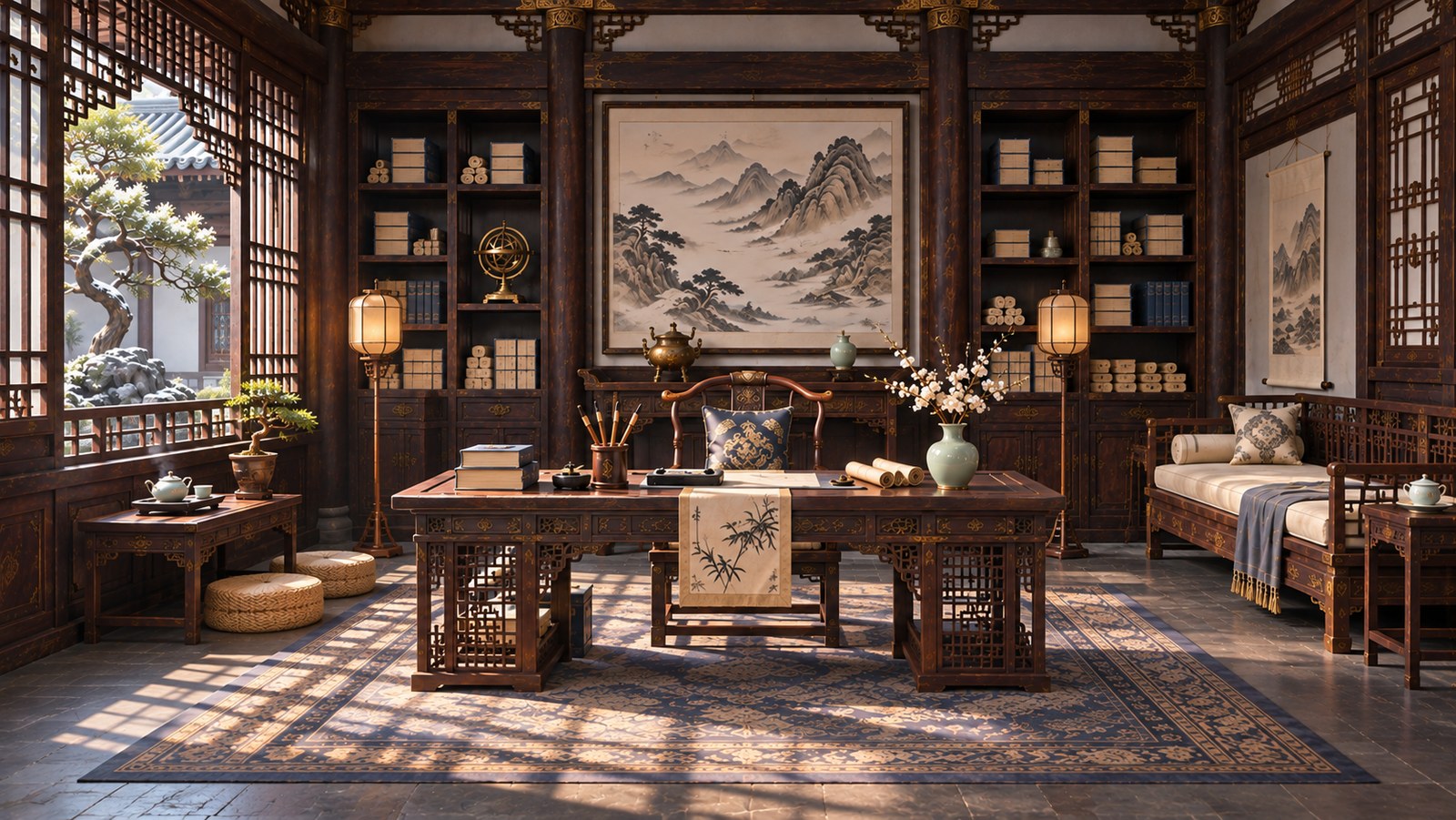
前视
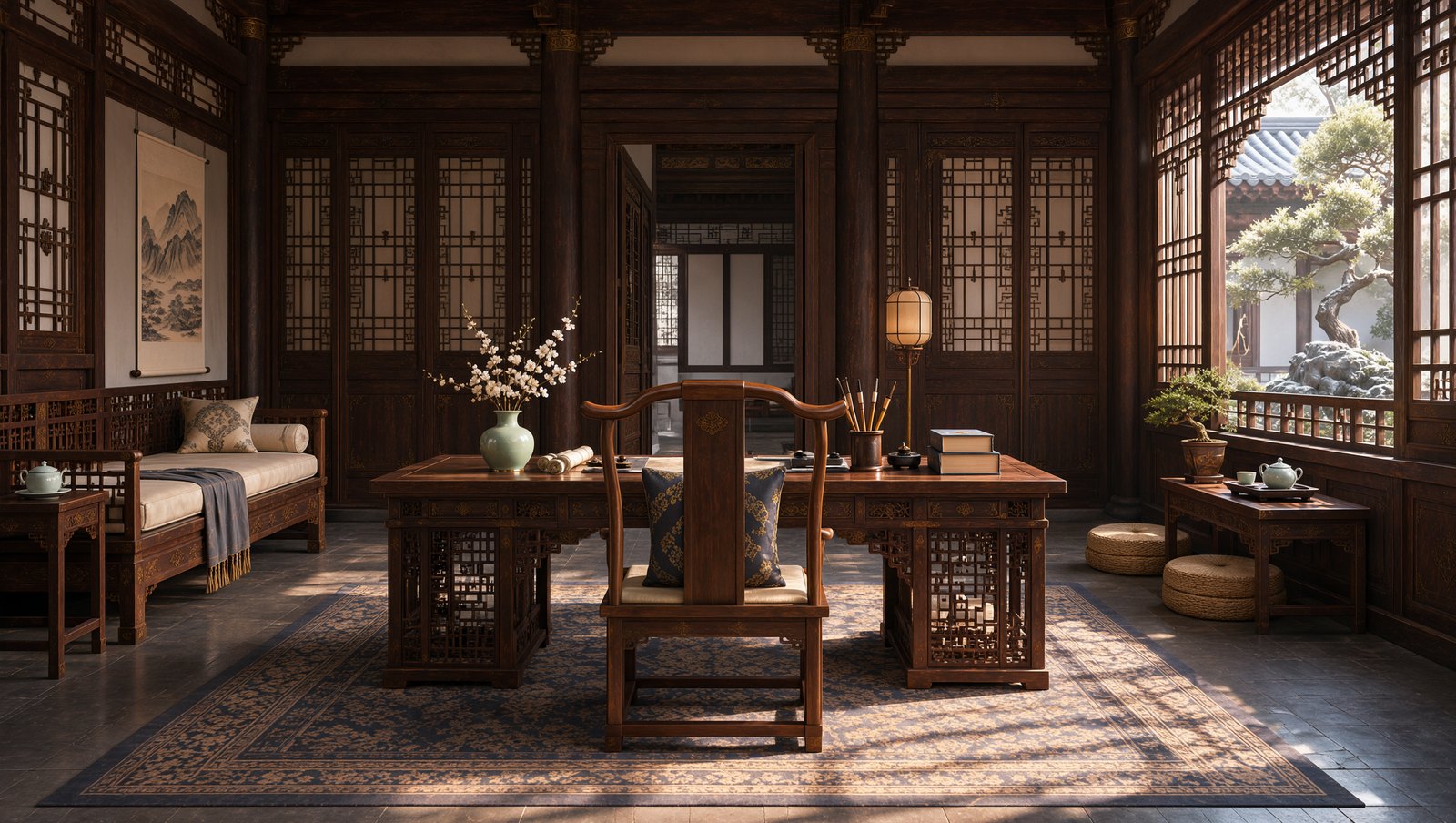
和参考图同向:窗在左、罗汉床在右、书架和画在后墙。 分数:H3-Image 5、5、5;Qwen 5、5、5。
H3-Image,3 个种子
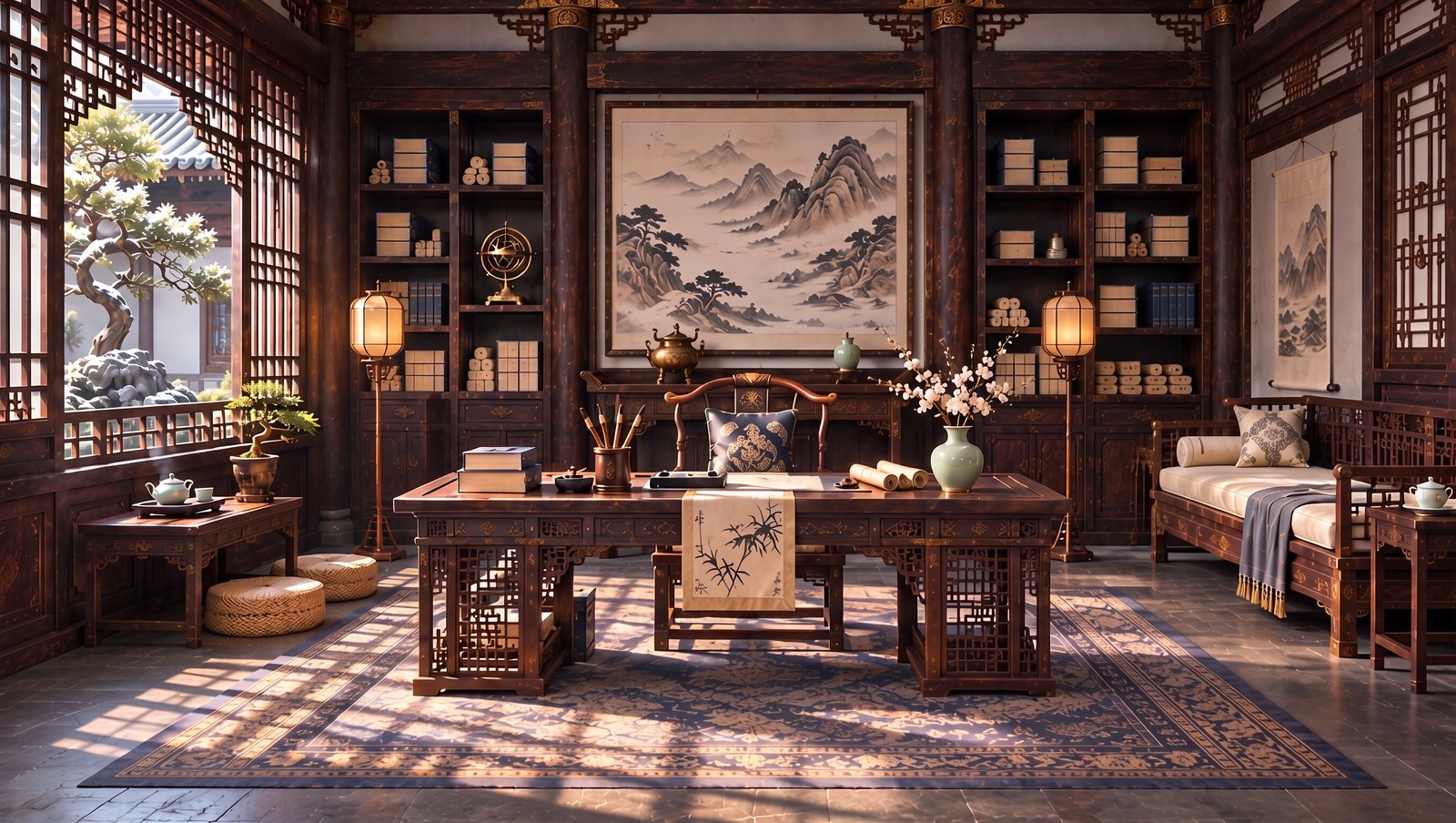
和参考图几乎一样,镜头略广、多露一点地面。
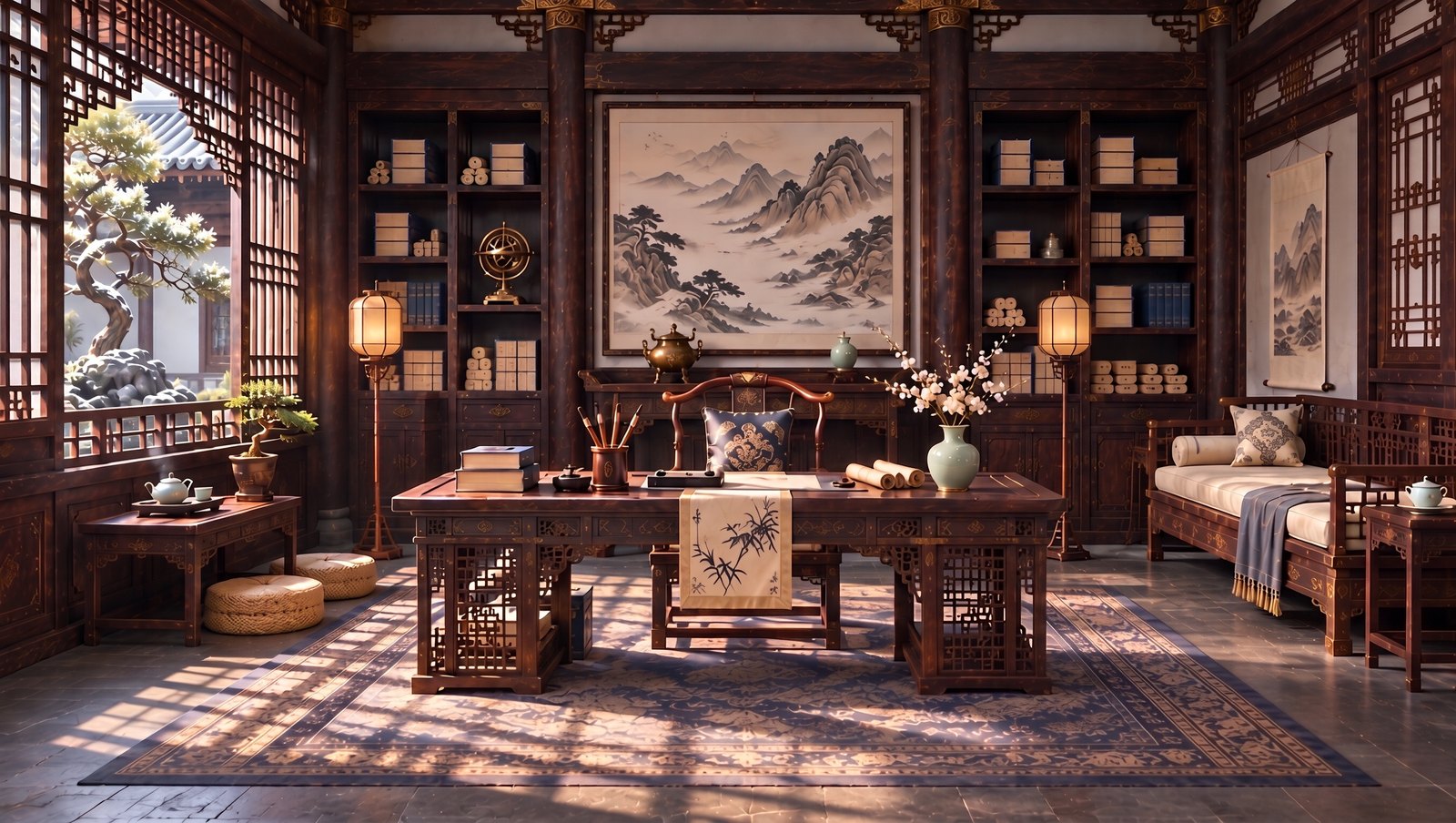
基本是原图(和参考图相关度 0.98),没按要求把镜头放广。
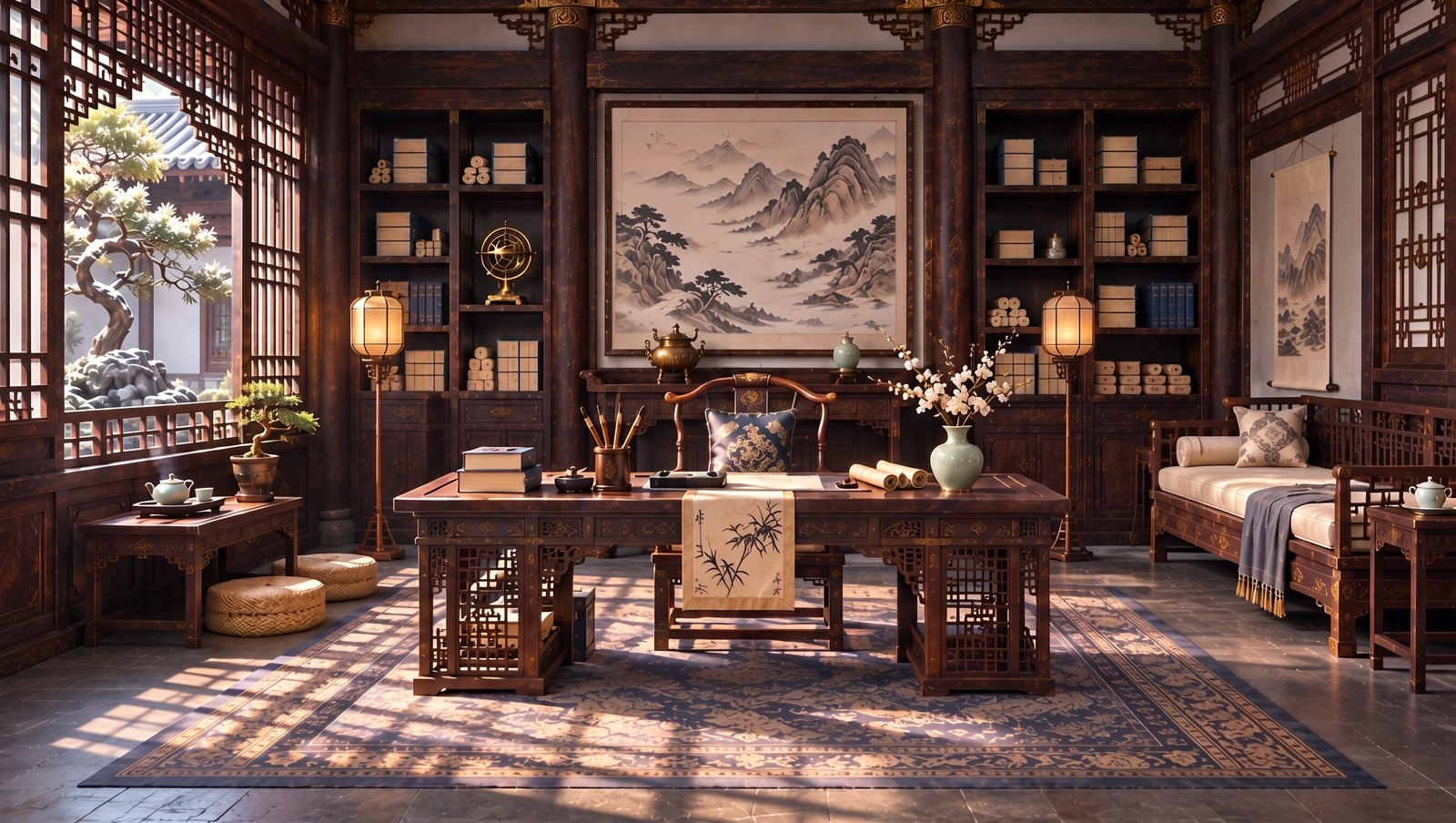
和参考图几乎一样,镜头略广。
Qwen-Image-2.1,3 个种子
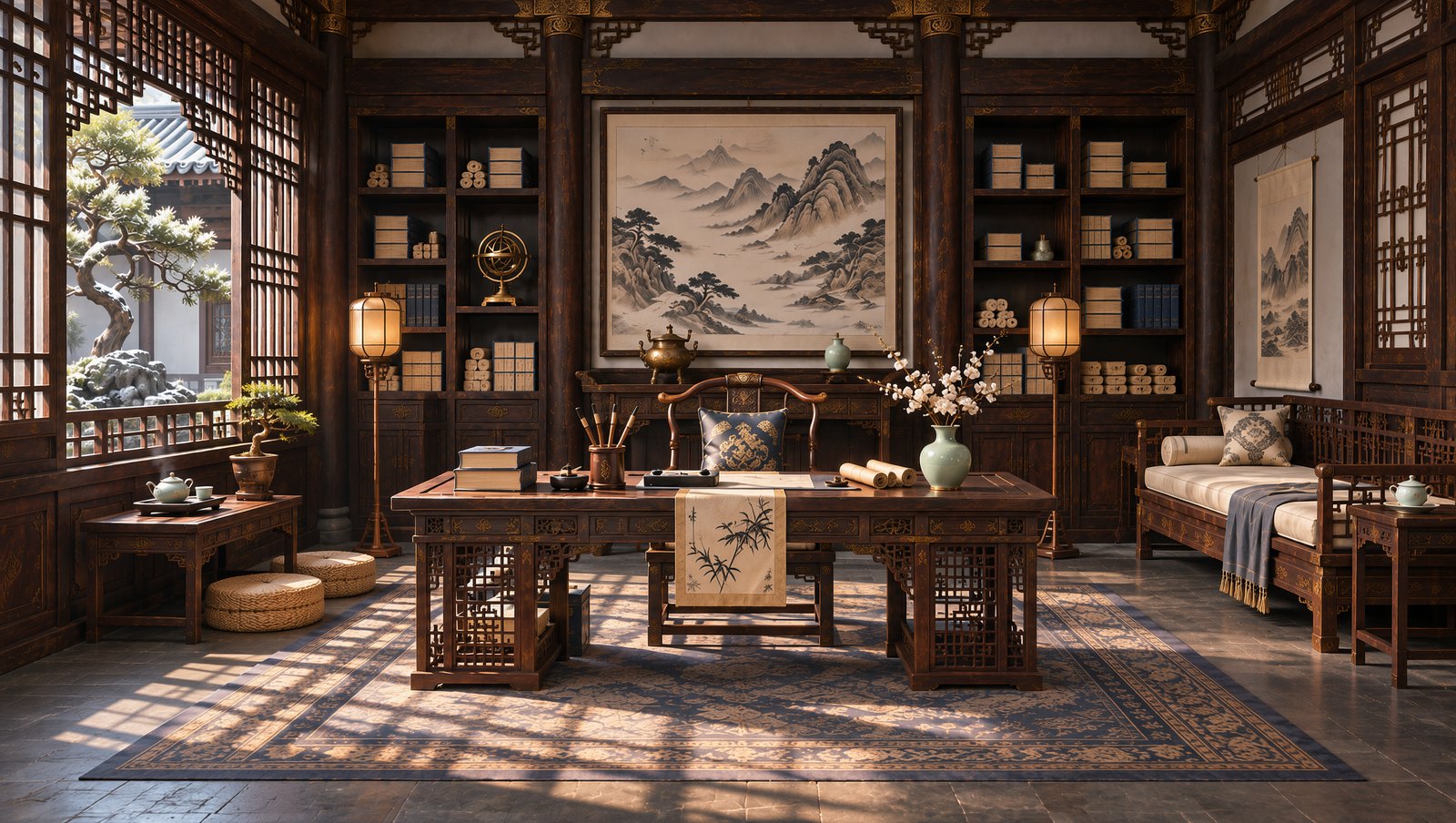
和参考图几乎一样,镜头略广。
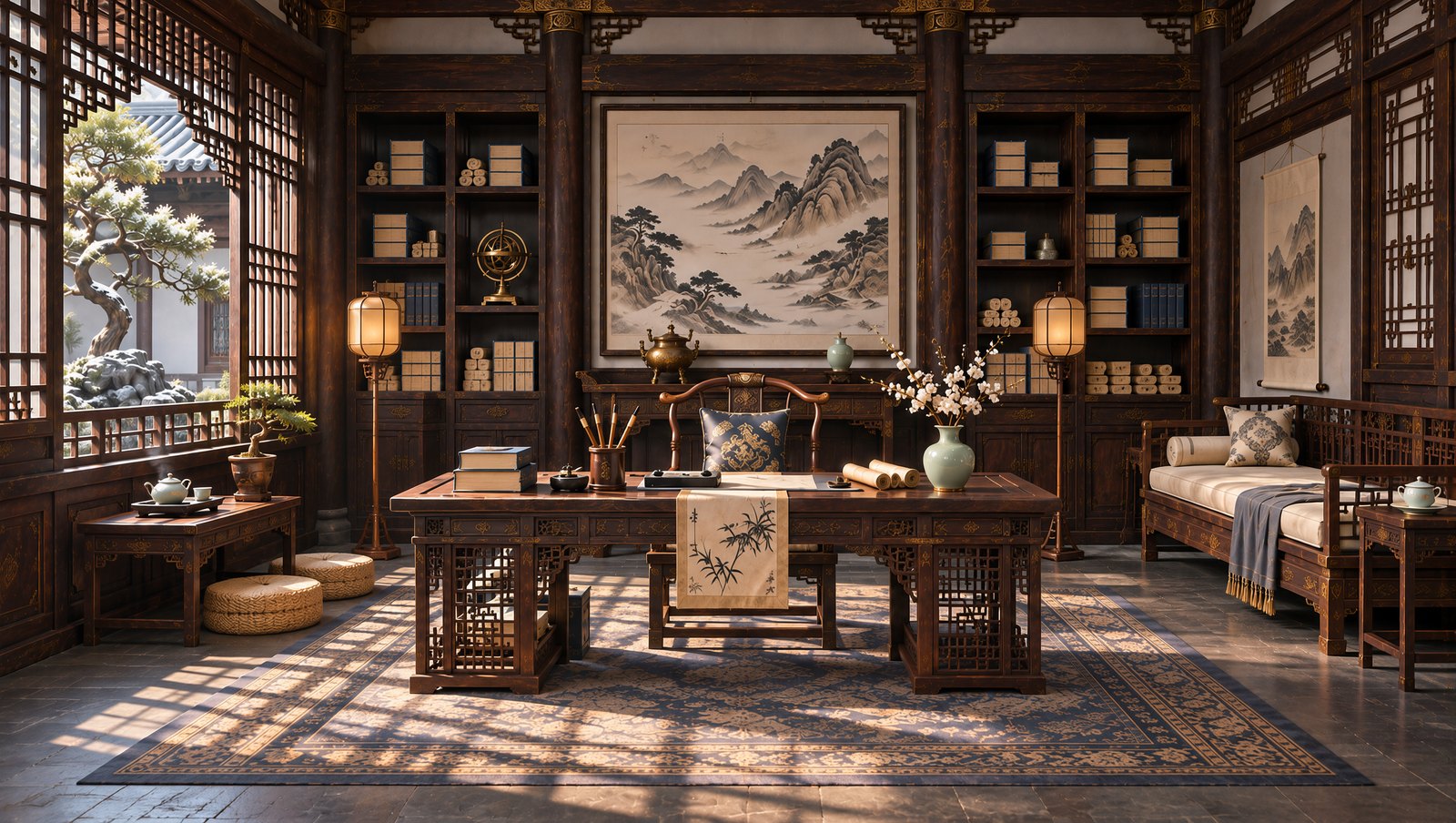
和参考图几乎一样,镜头略广。
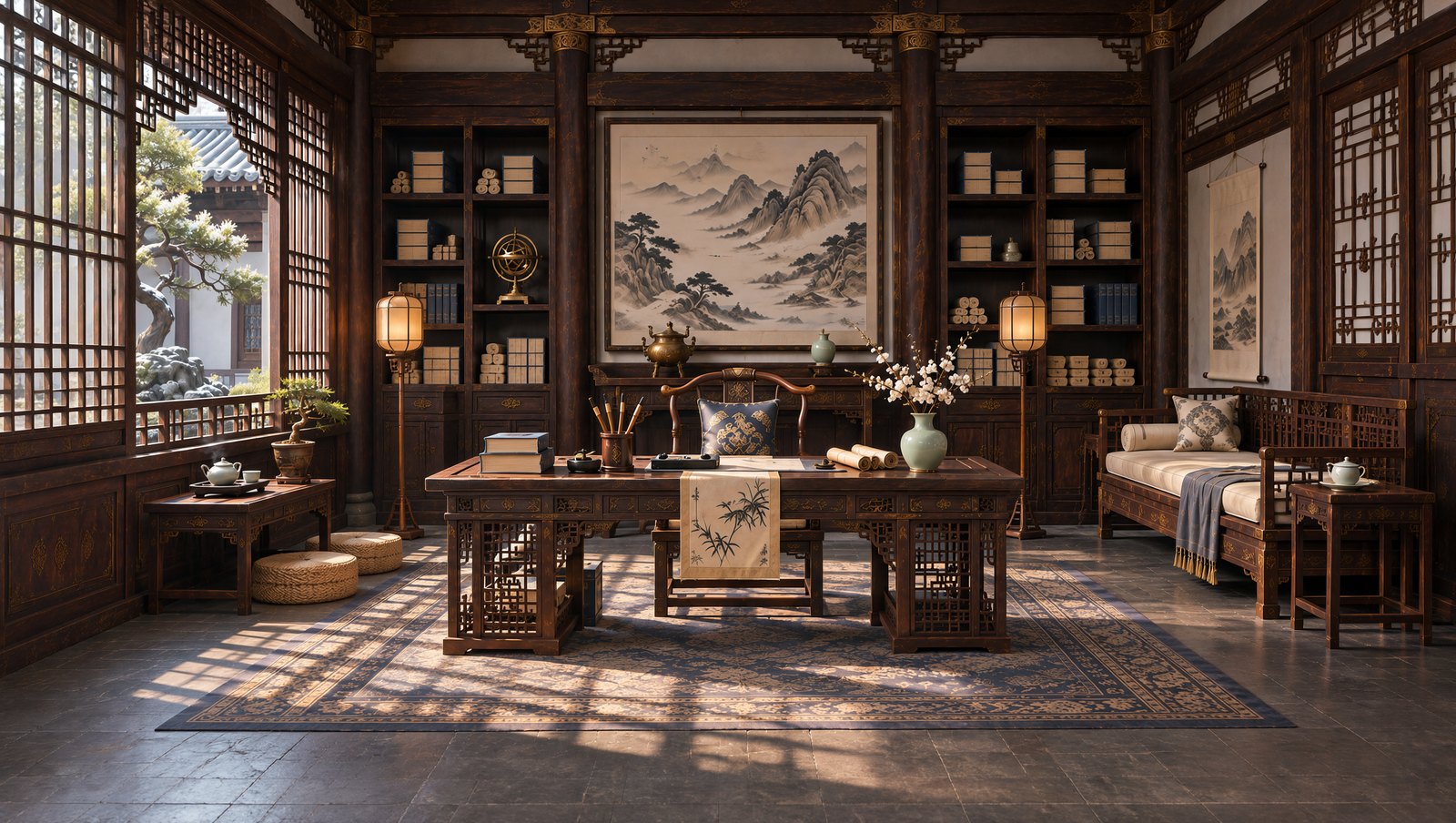
镜头拉得最开,两侧墙和顶都露出来,东西都在原位(和参考图相关度 0.42)。
后视
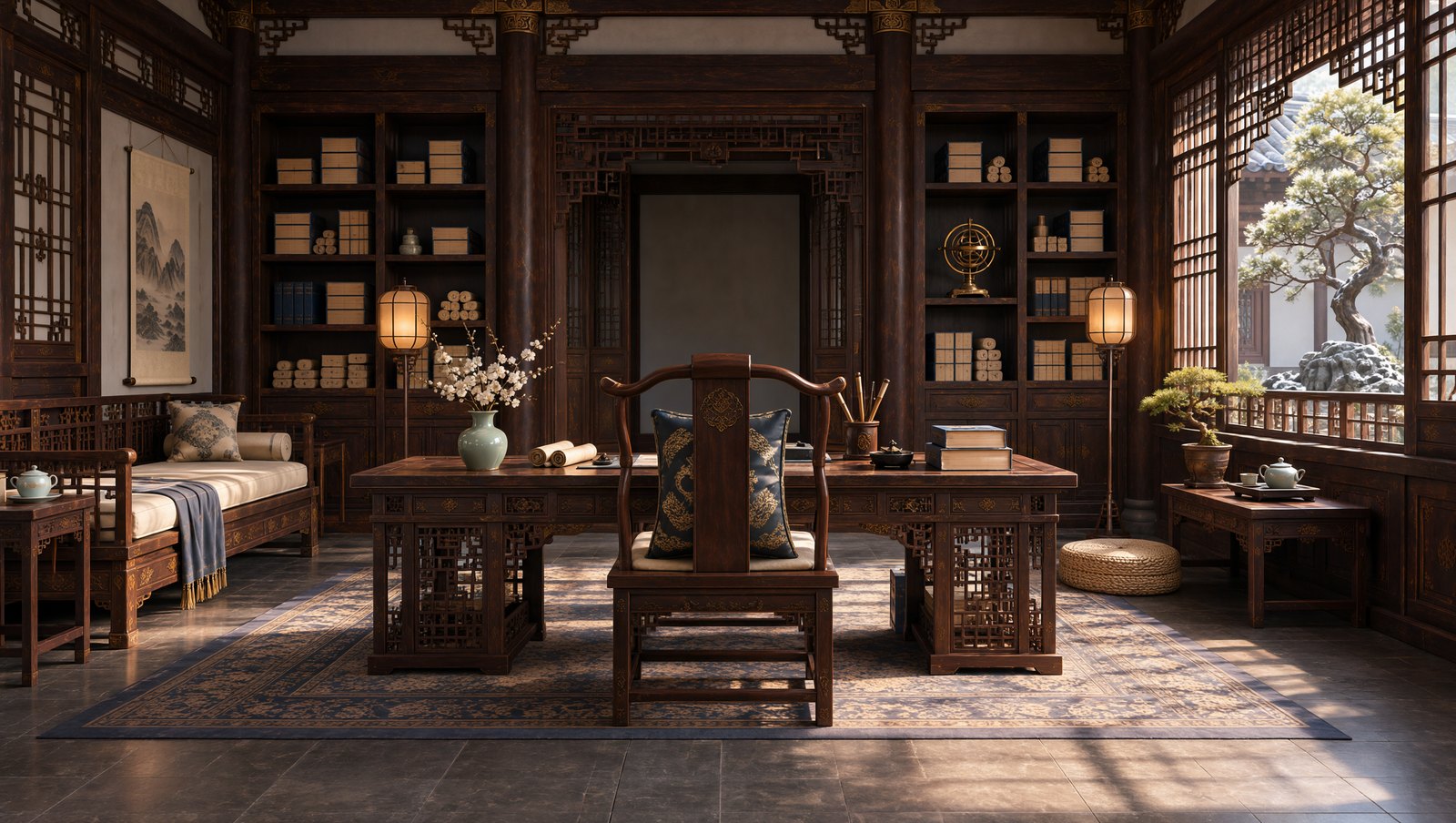
转 180°:窗和茶几到右边、罗汉床到左边;前景是椅背和书案背面,桌上东西左右顺序反过来;书架和画在镜头背后,不该出现。 分数:H3-Image 4、5、4;Qwen 4、4、3。
H3-Image,3 个种子
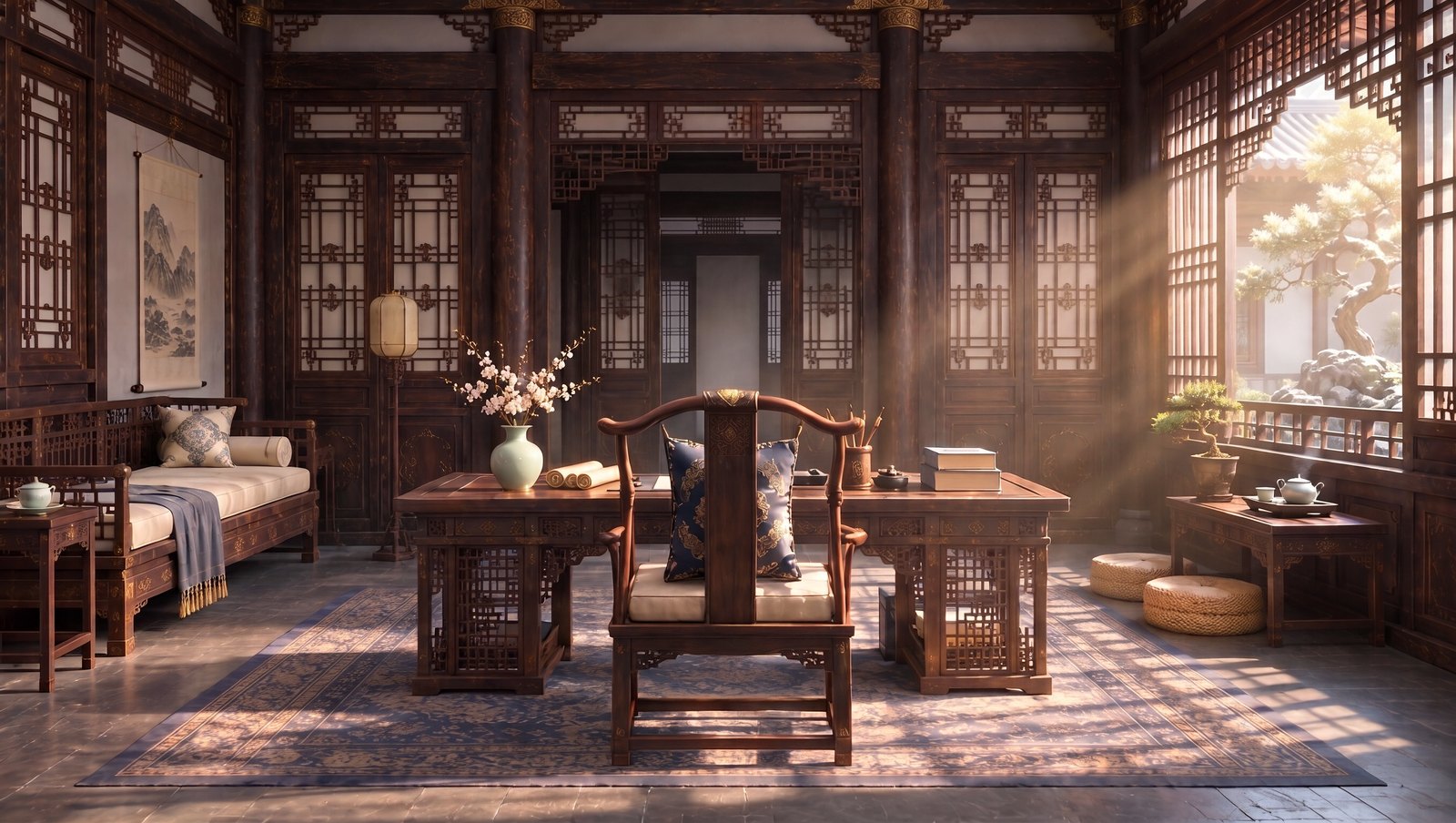
真转过来了:前景椅背(靠背板挡在靠垫前,方向对),书案背面,桌上顺序整个反过来(青瓷瓶到左、书到右),窗和茶几盆景蒲团到右,罗汉床小几挂轴到左,南墙编了格扇门。宫灯只剩一盏,还放到了书案远端(原图里宫灯比椅子更靠后墙,这里应该离镜头更近)。
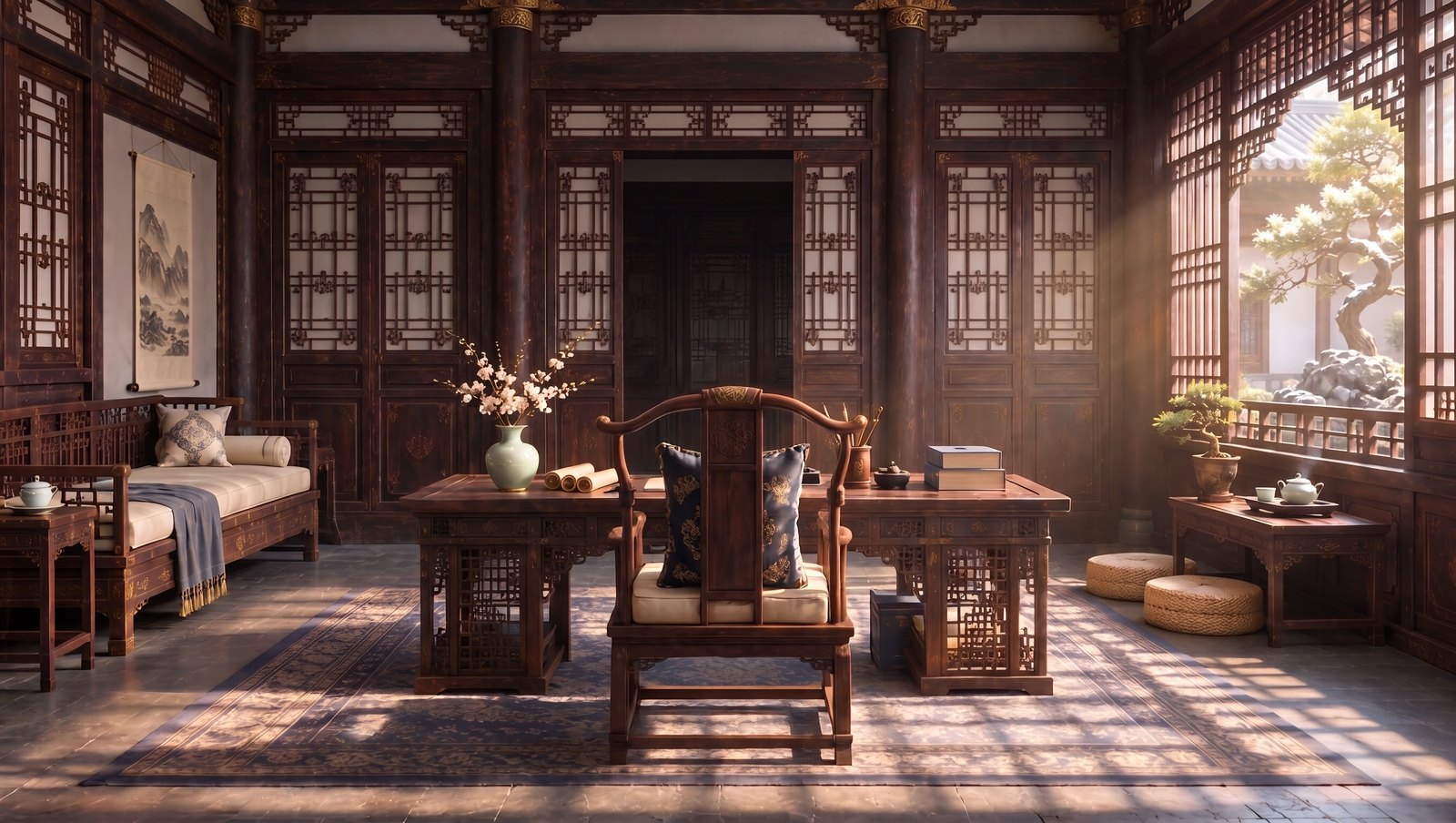
同上,方位全对,宫灯在画外(离镜头近,合理)。
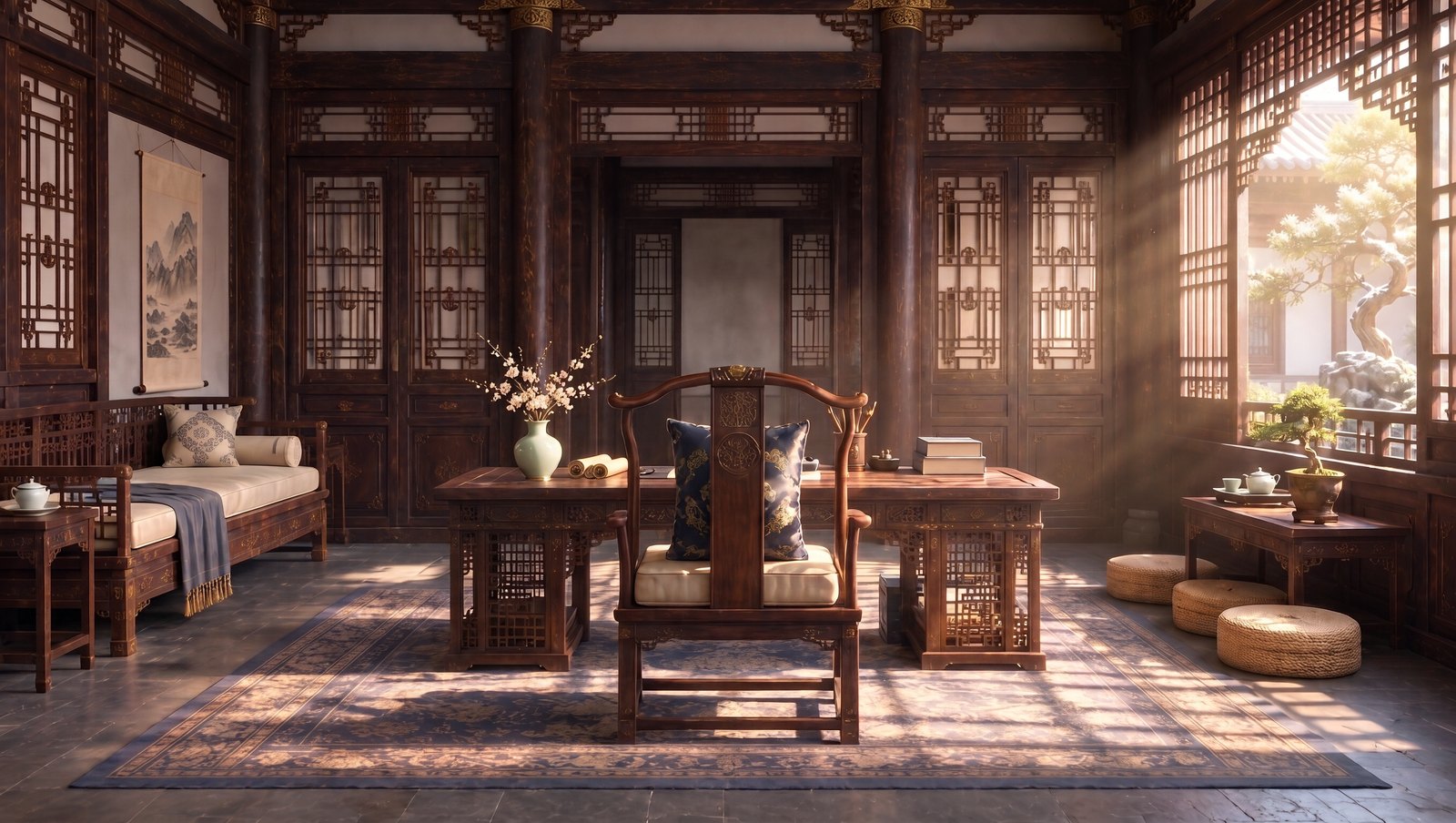
方位全对,窗边的阳光很好;蒲团从两个变成三个。
Qwen-Image-2.1,3 个种子
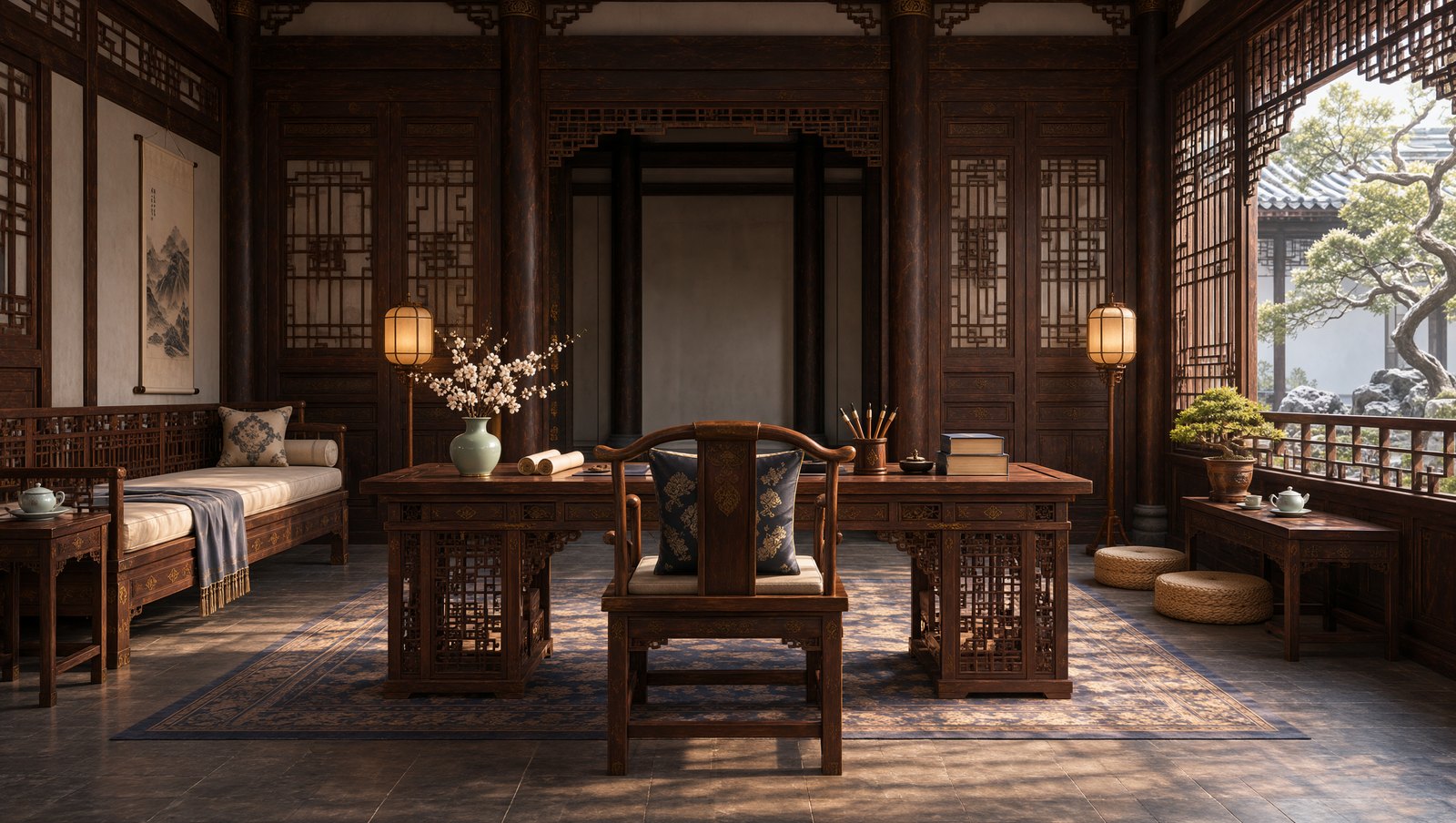
方位全对,椅子背对镜头、桌上顺序反过来;两盏宫灯放到了书案远端两侧。
方位全对;一盏宫灯在书案远端右侧。
转过来了,窗在右、罗汉床在左都对,但南墙两侧摆着和后墙一样的书架和浑仪,看的人会以为还是后墙。
多出 / 搬错:南墙上抄了一套后墙的书架,连铜浑仪都抄过去了
左视
站在窗边往东看:罗汉床那面墙正对镜头;后墙书架在画面左边;书案侧面,椅子在左、桌旗在右;窗在镜头背后,不该出现。 分数:H3-Image 5、5、5;Qwen 2、3、3。
H3-Image,3 个种子
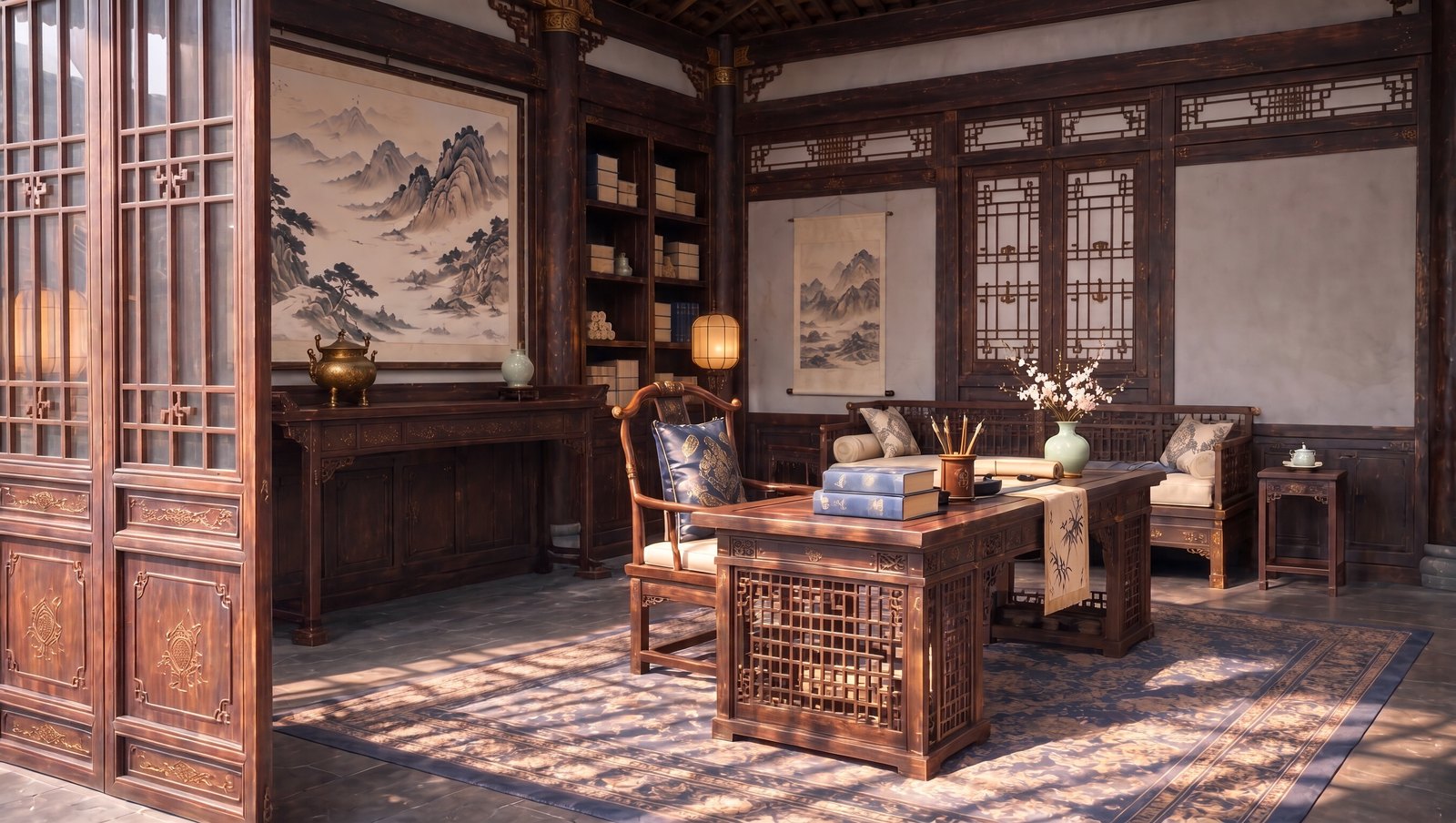
标准左视图:后墙的画、长案(香炉、青瓷小瓶)、书架到了画面左边,罗汉床、小几、挂轴、东窗正对镜头;书案短边朝镜头,椅子在左、桌旗在右。左前景加了一扇格扇门。
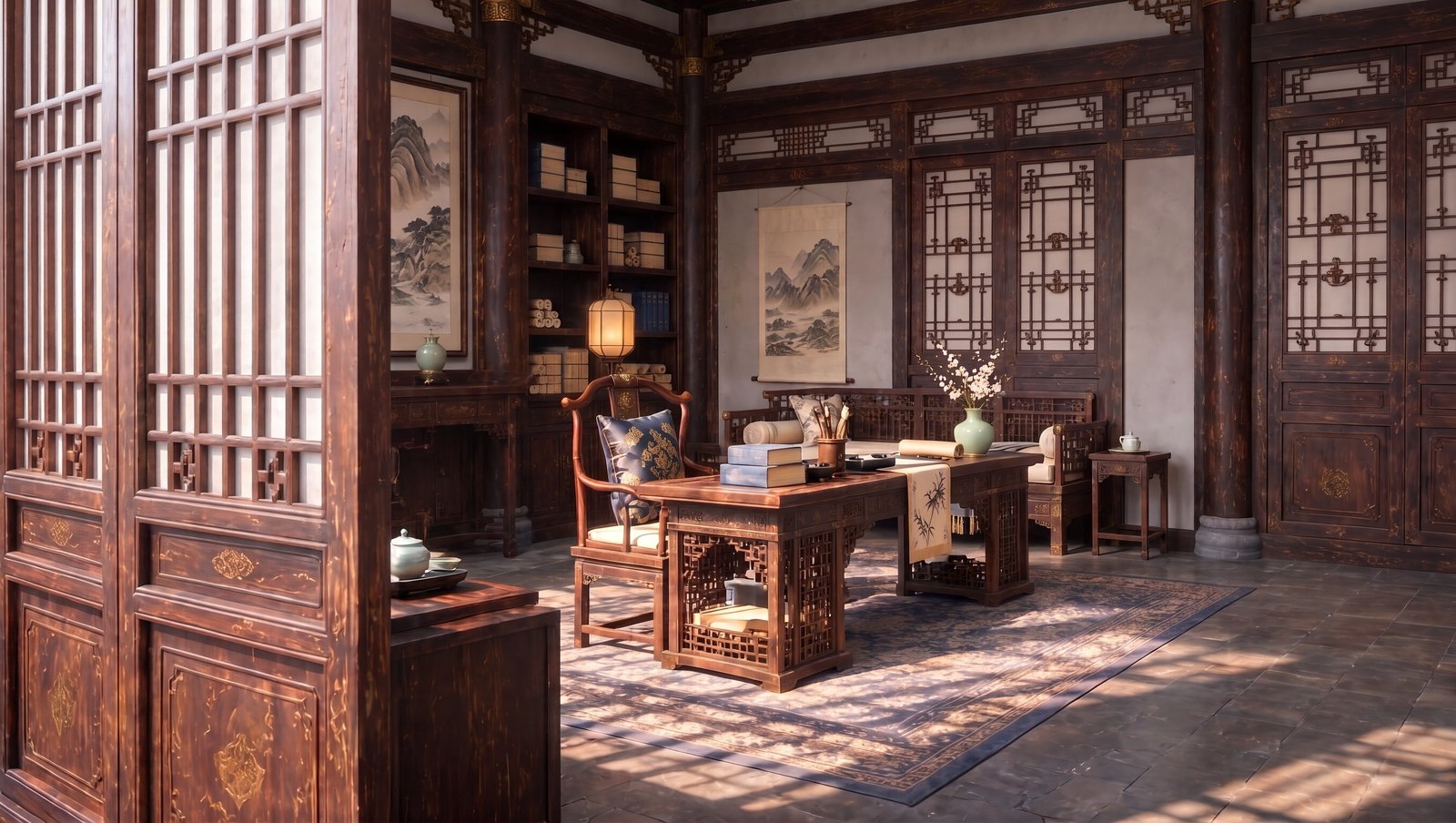
同上,左下角露出窗边茶几的一角(相机就在窗前,合理)。
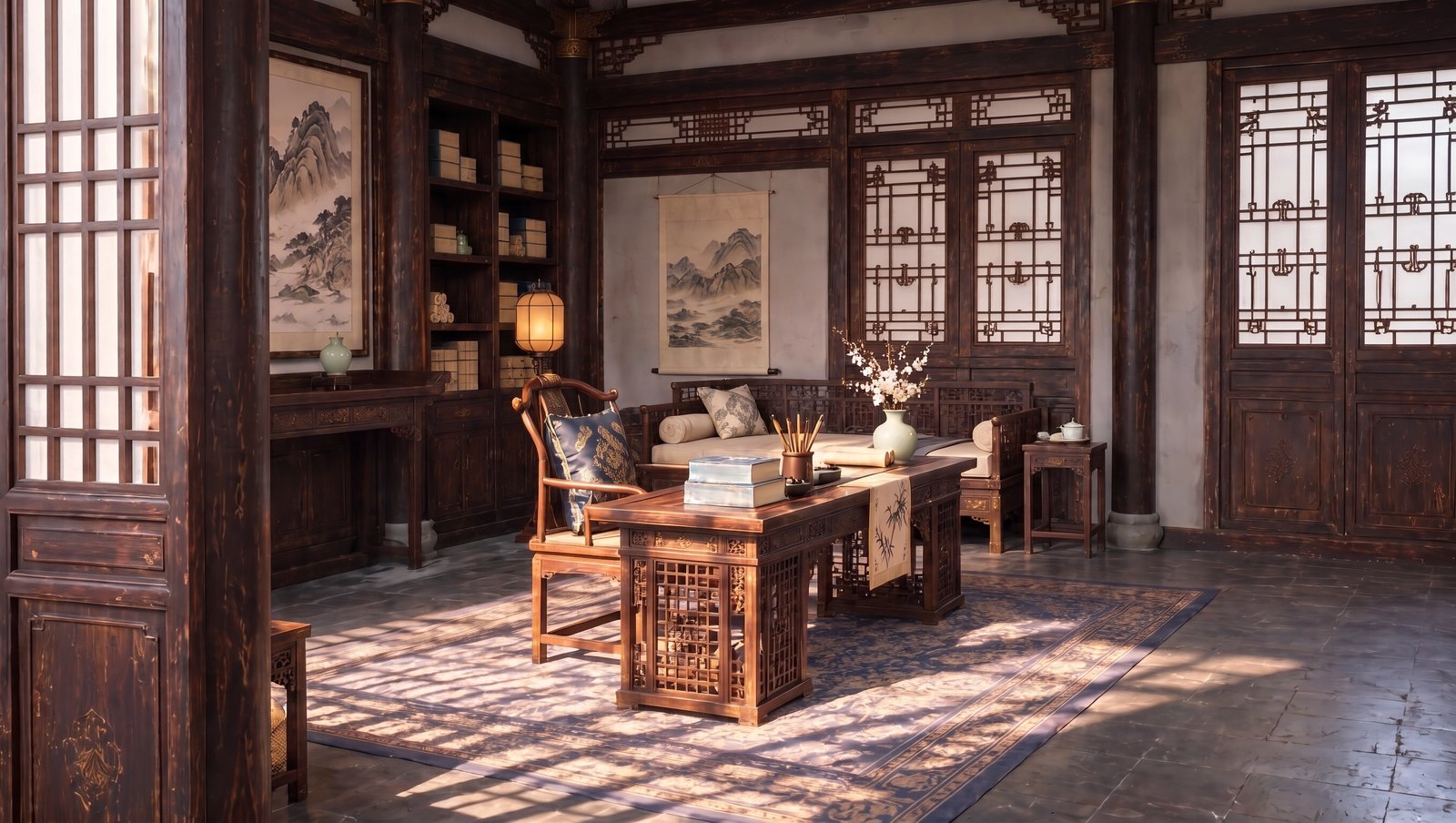
同上。
Qwen-Image-2.1,3 个种子
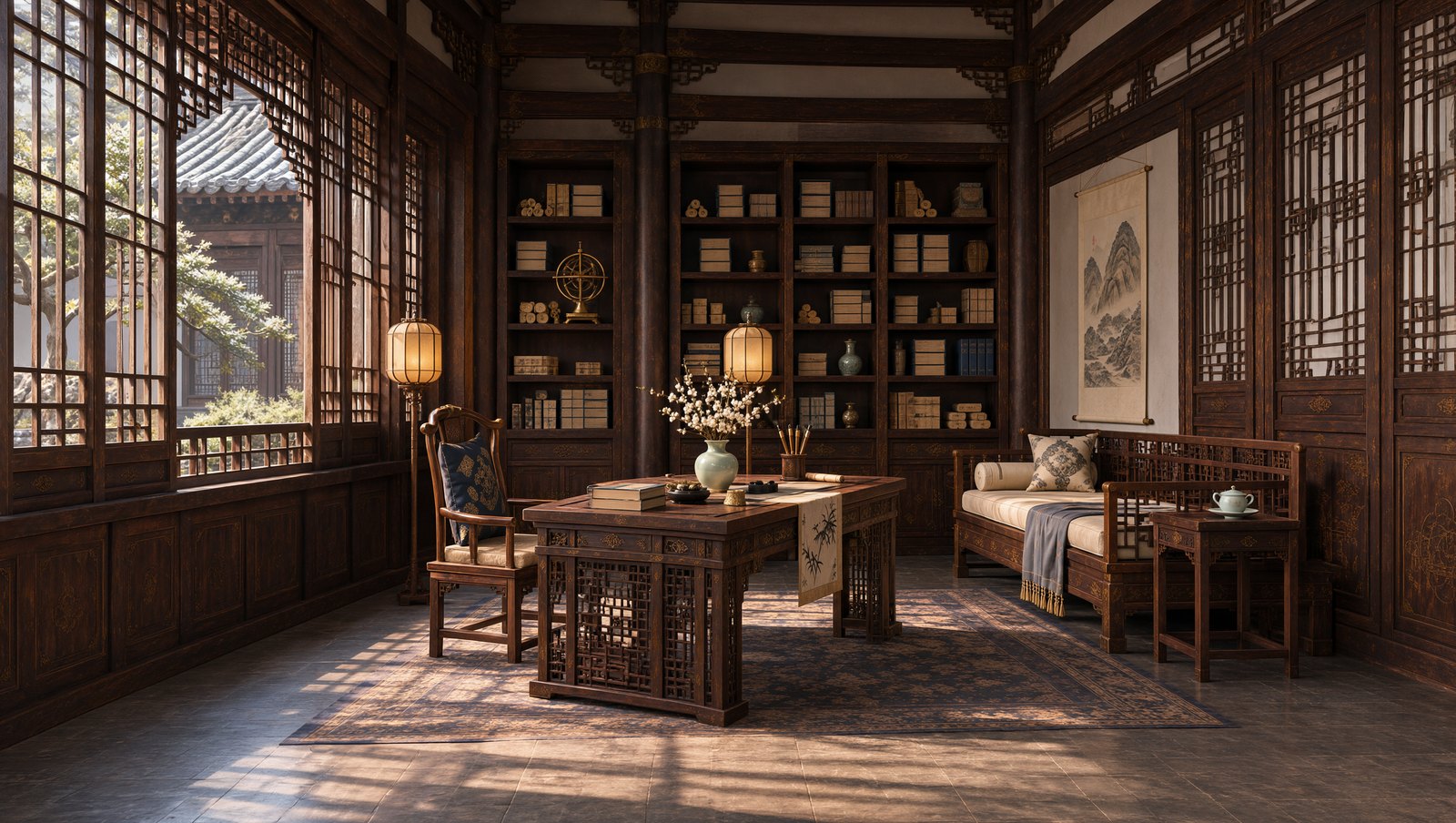
没换方向:书架那面墙仍然正对镜头,格窗在左、罗汉床在右,还是从南往北看,只是把书案原地转了 90°(短边朝镜头)。
多出 / 搬错:镜头背后的格窗和庭院出现在画面左边
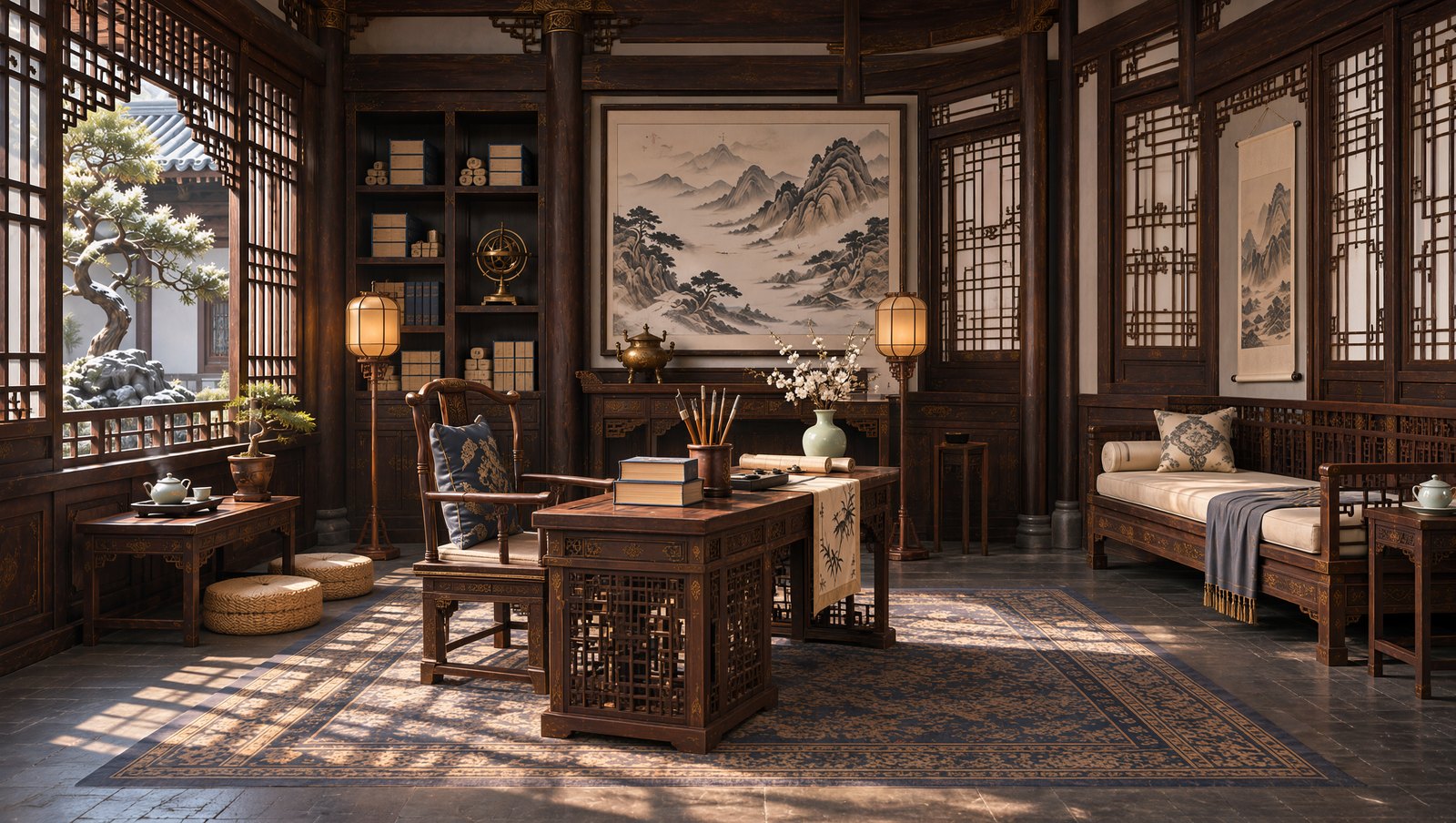
只转了约 45°:后墙的画在画面中间偏左,罗汉床在右;书案被转成短边朝镜头。和参考图相关度 0.58,基本还是正面。
多出 / 搬错:格窗、庭院、茶几、蒲团出现在画面左边
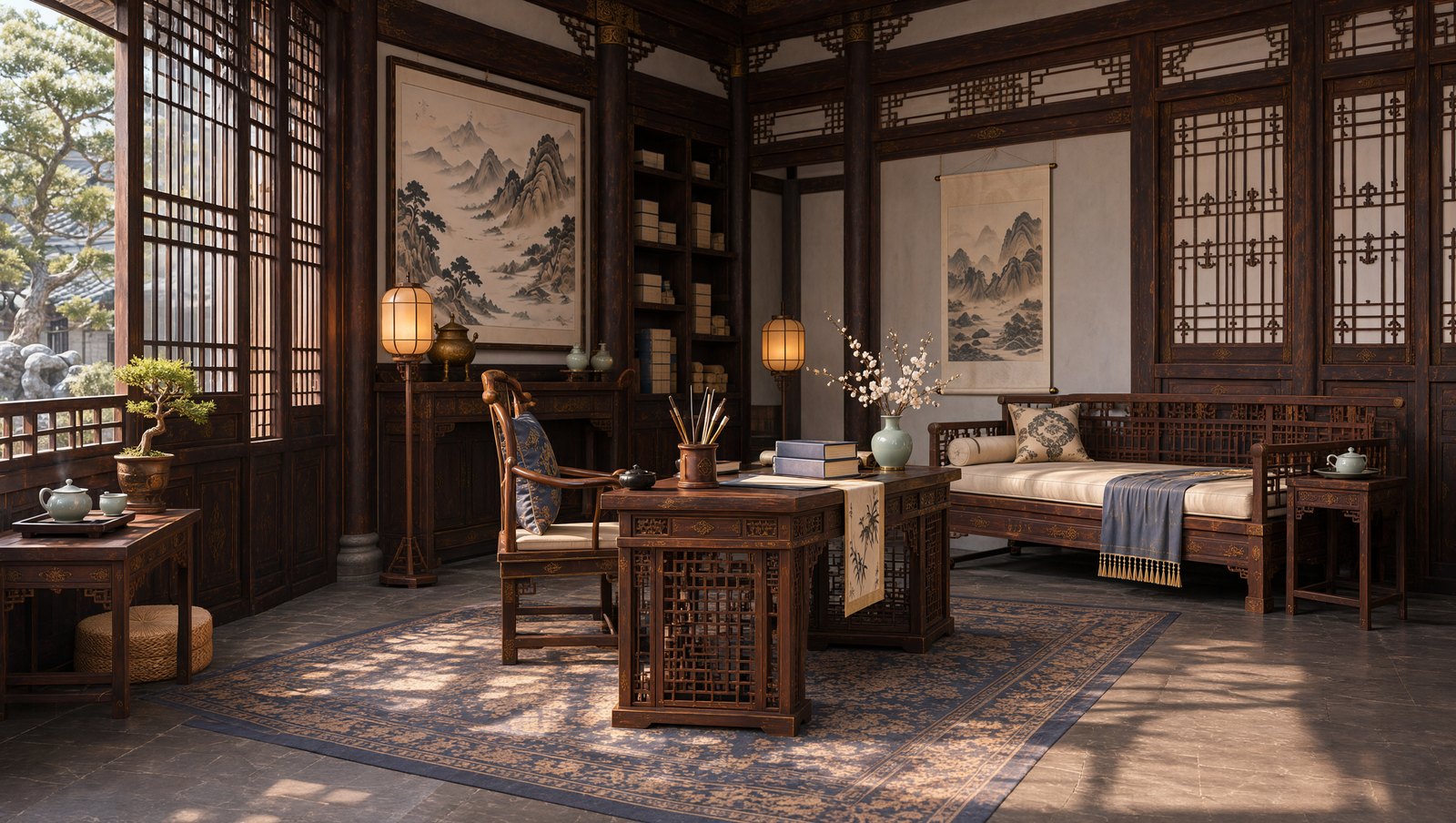
同种子 2,转了一半。
多出 / 搬错:格窗、庭院、茶几出现在画面左边
右视
站在罗汉床边往西看:格窗和庭院正对镜头,茶几盆景蒲团在窗前;后墙书架在画面右边;书案侧面,椅子在右、桌旗在左;罗汉床在镜头背后,不该出现。 分数:H3-Image 5、5、5;Qwen 5、5、3。
H3-Image,3 个种子
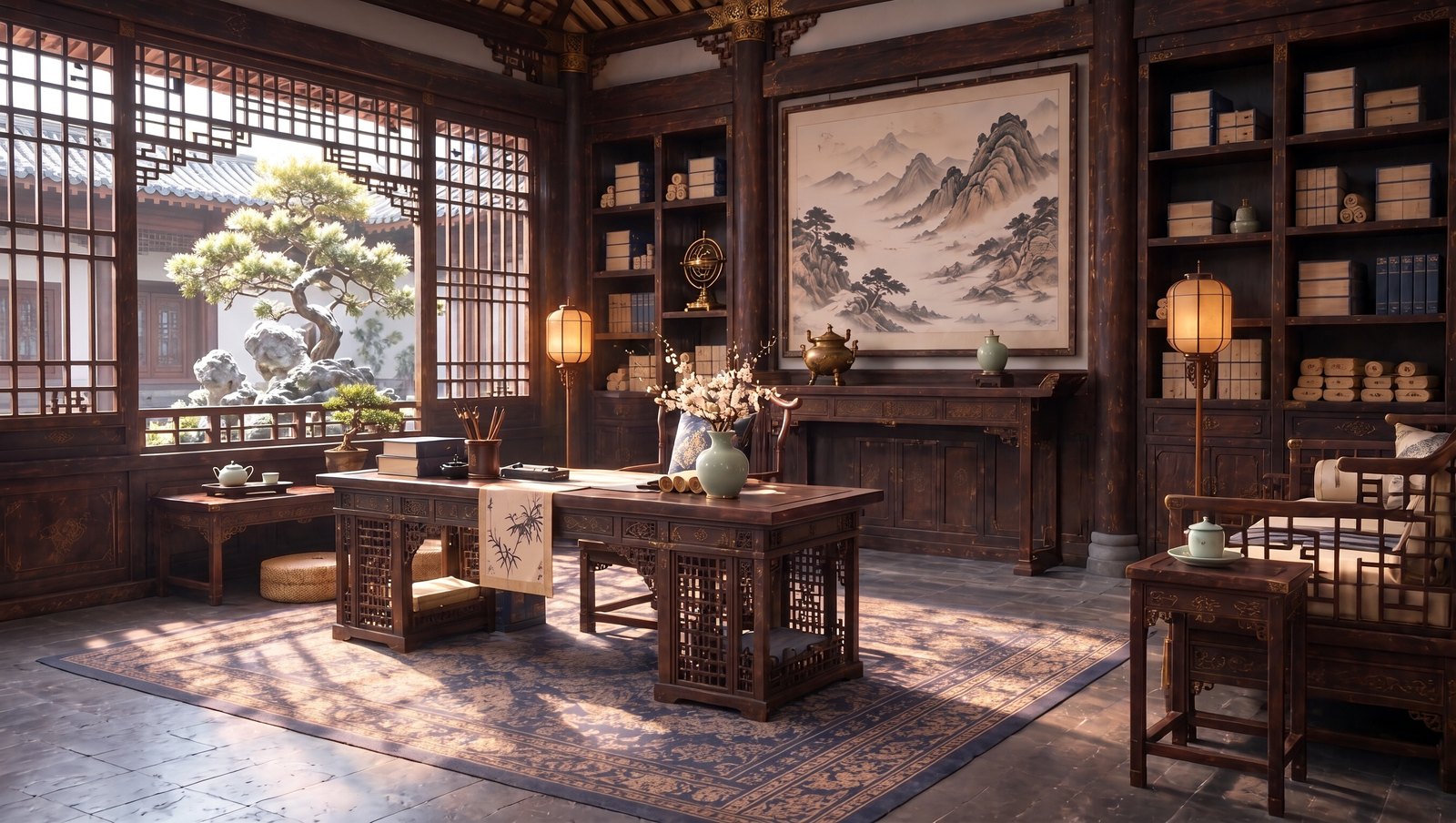
格窗和庭院(松、太湖石)正对镜头,窗前茶几盆景蒲团;后墙的画、长案、书架、浑仪、宫灯在右;书案桌旗在左、椅子在右;右前景露出罗汉床和小几(相机就站在旁边)。
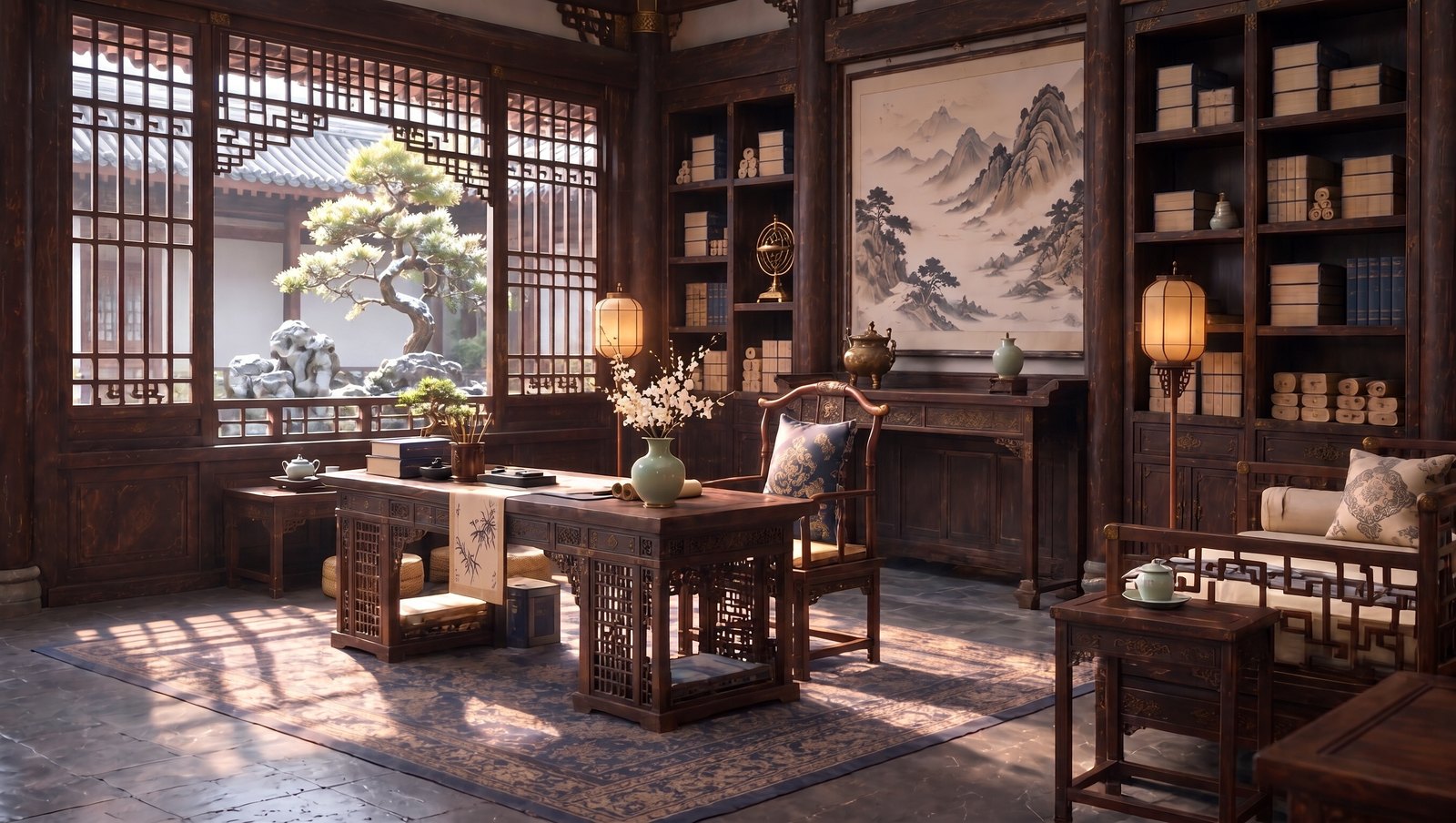
同上。
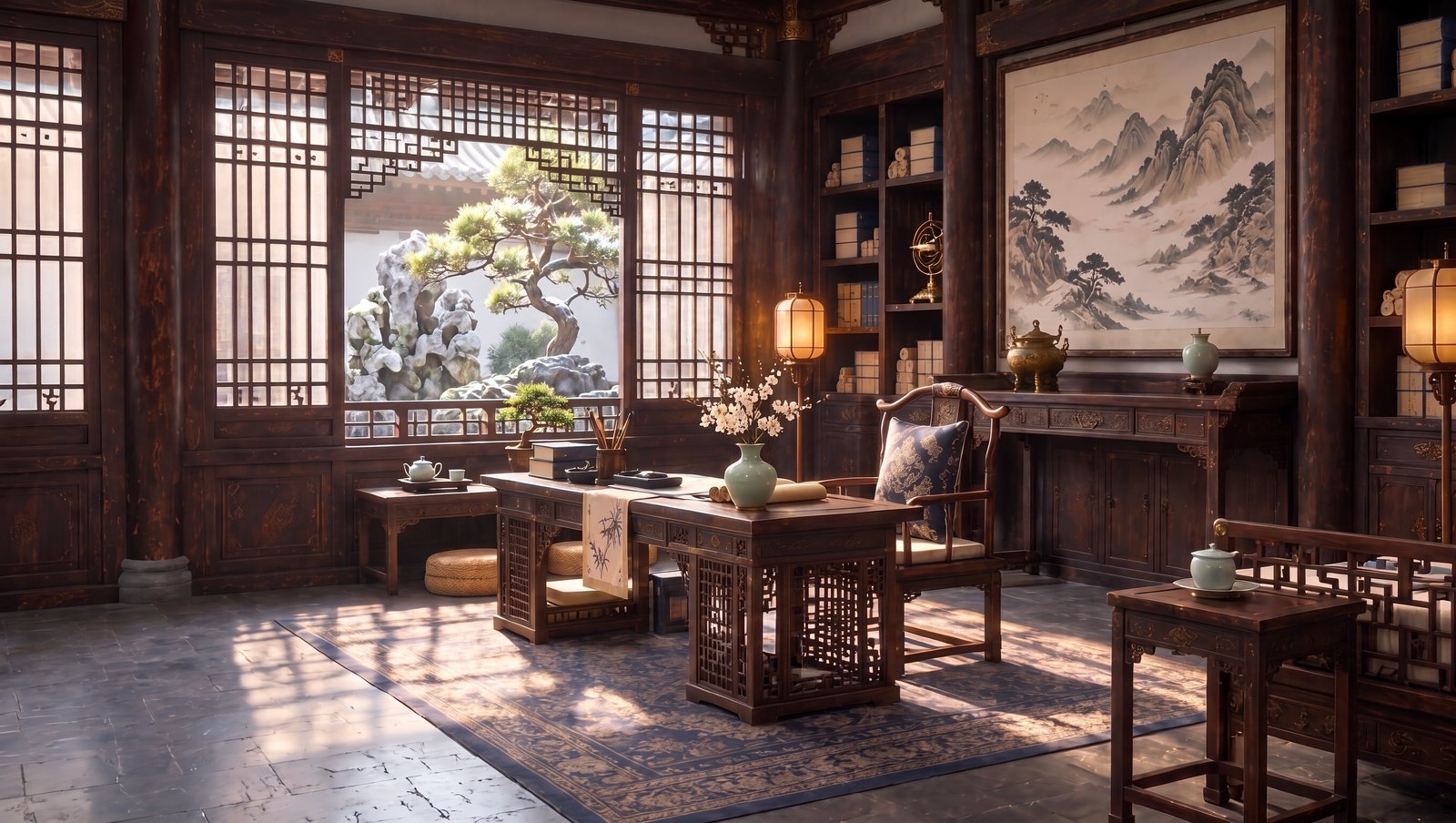
同上,太湖石画得最清楚。
Qwen-Image-2.1,3 个种子
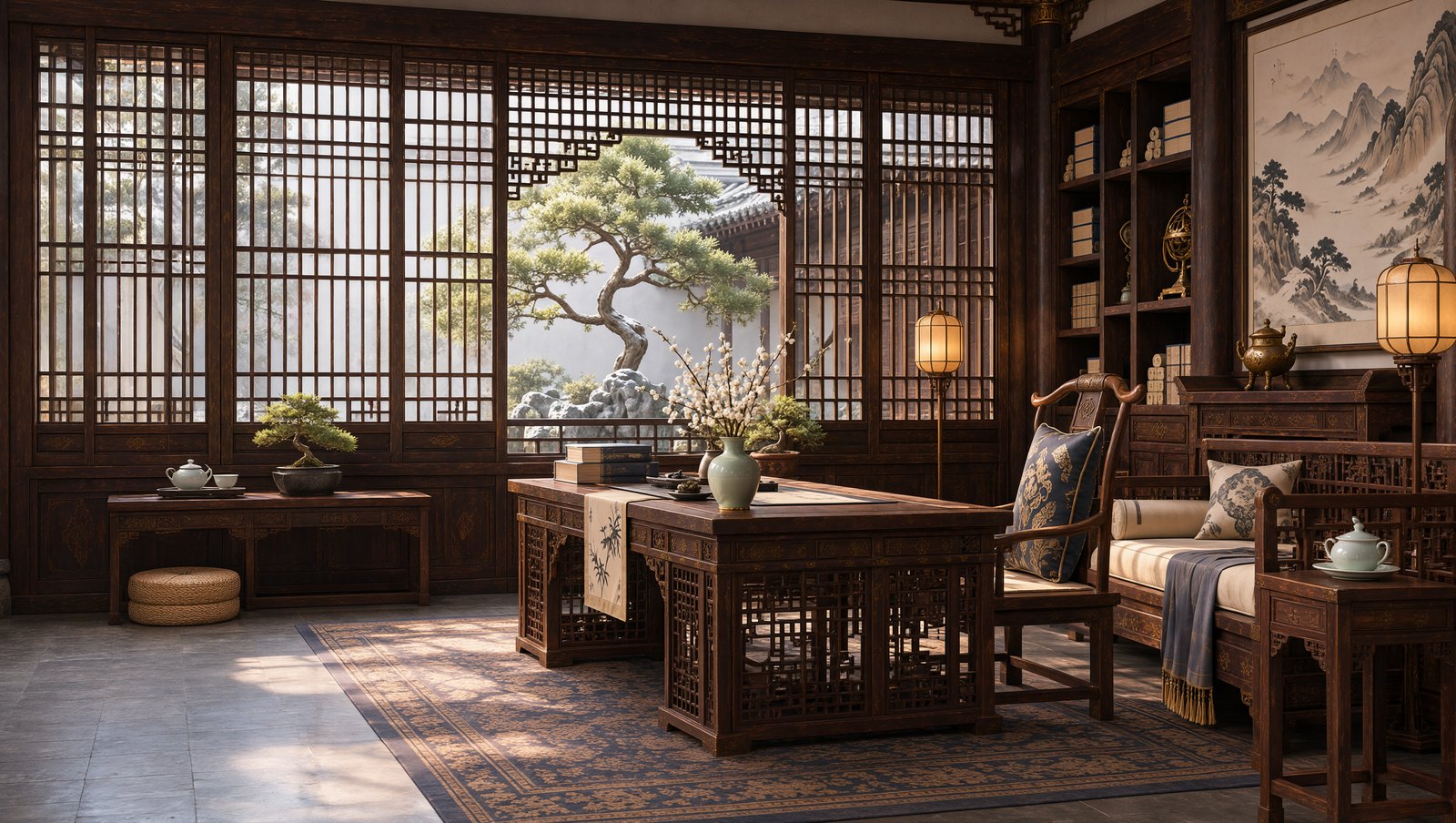
格窗庭院正对镜头,后墙的画和书架在右,书案桌旗在左、椅子在右,右前景是罗汉床。
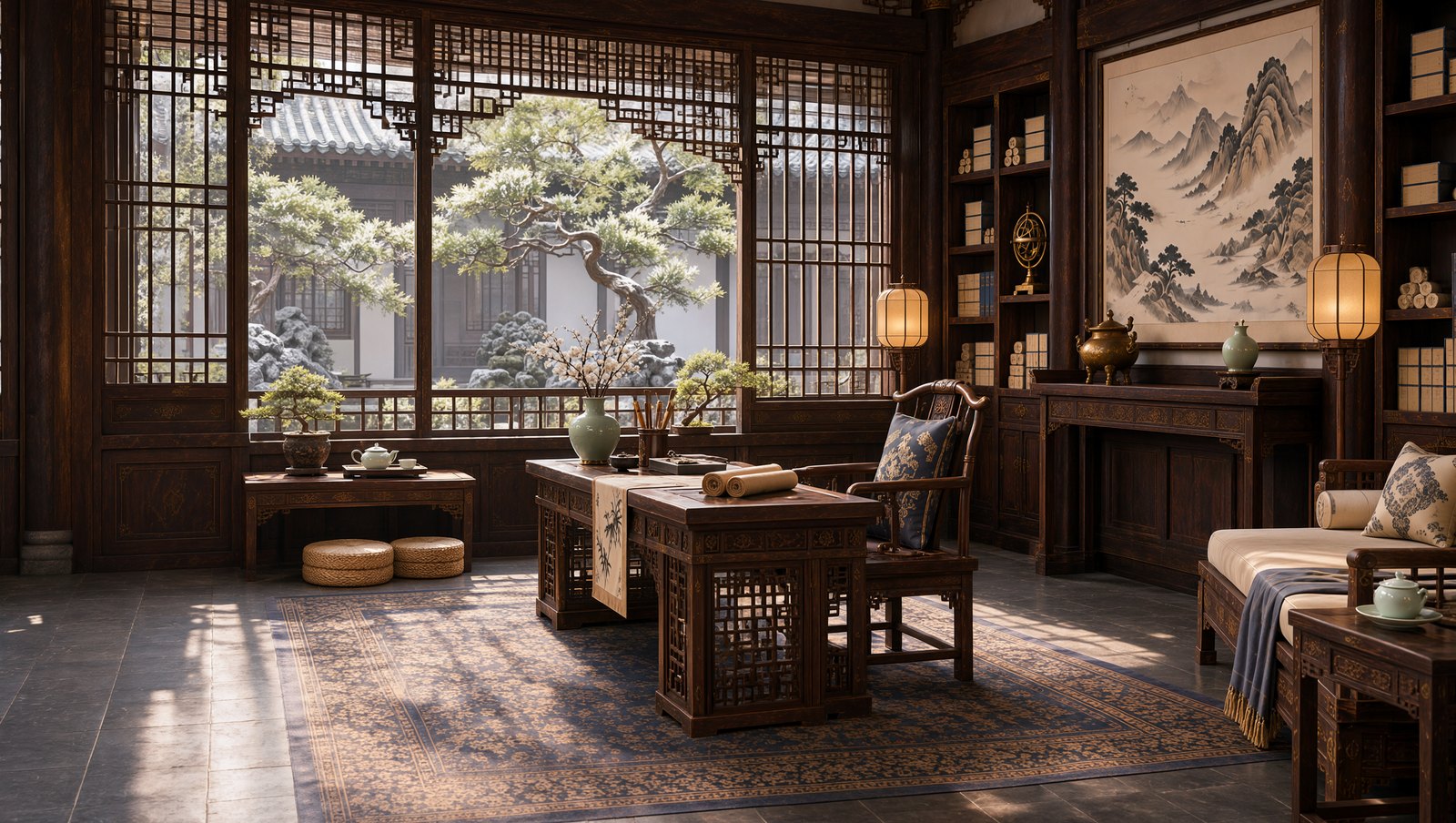
同上。
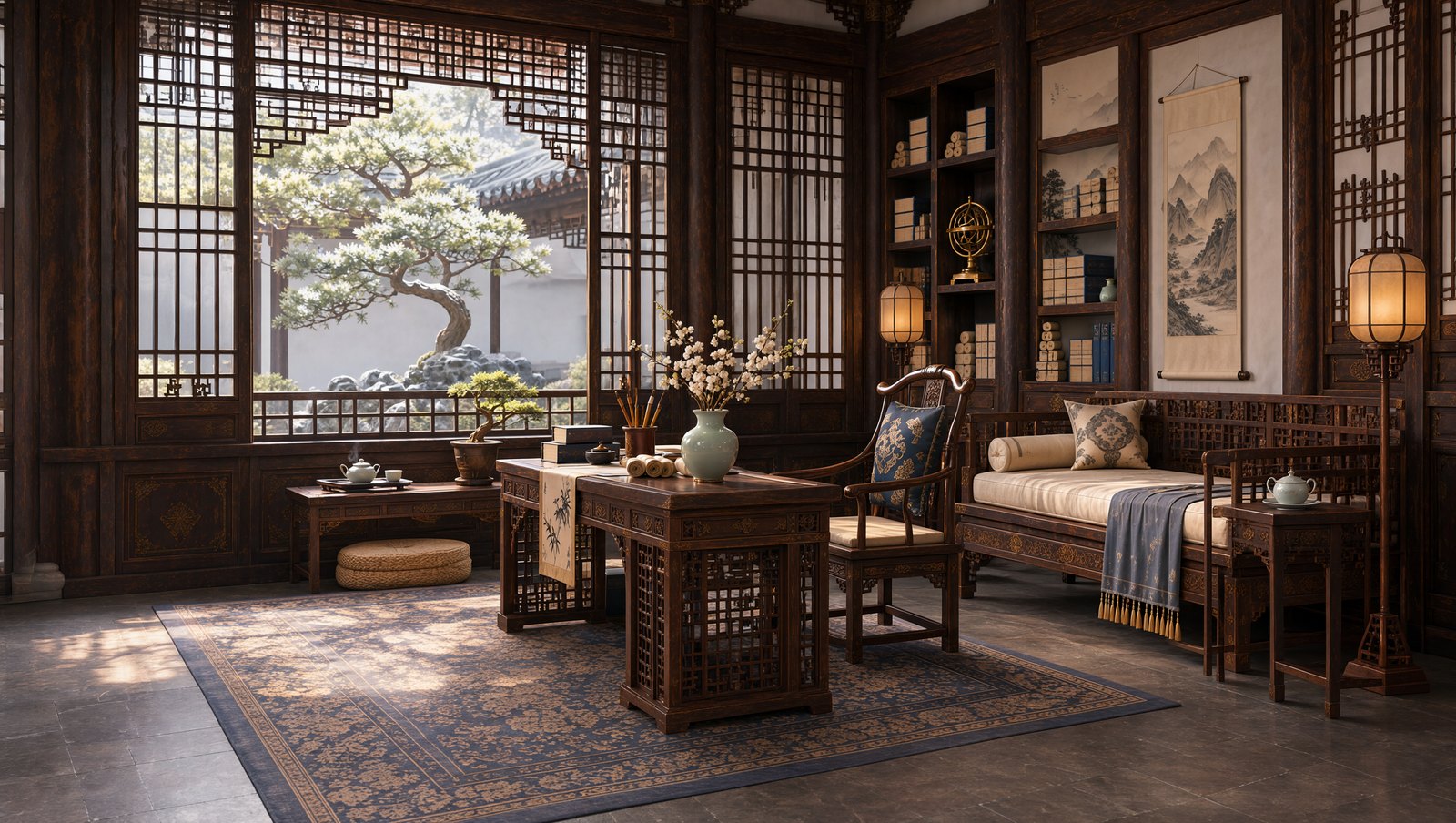
窗、茶几、书案的方位都对,但罗汉床那一组本该在镜头背后,现在贴着后墙摆在画面右边。画面本身很好看。
多出 / 搬错:罗汉床、小几和右墙的挂轴整组被搬到了后墙书架前;后墙那幅大山水画不见了
垂直俯视
正上方垂直往下看:后墙在上、窗在左、罗汉床在右、书案在中间,椅子在书案上方,桌旗在下方;不能是斜着的俯拍。 分数:H3-Image 5、5、5;Qwen 5、5、5。
H3-Image,3 个种子
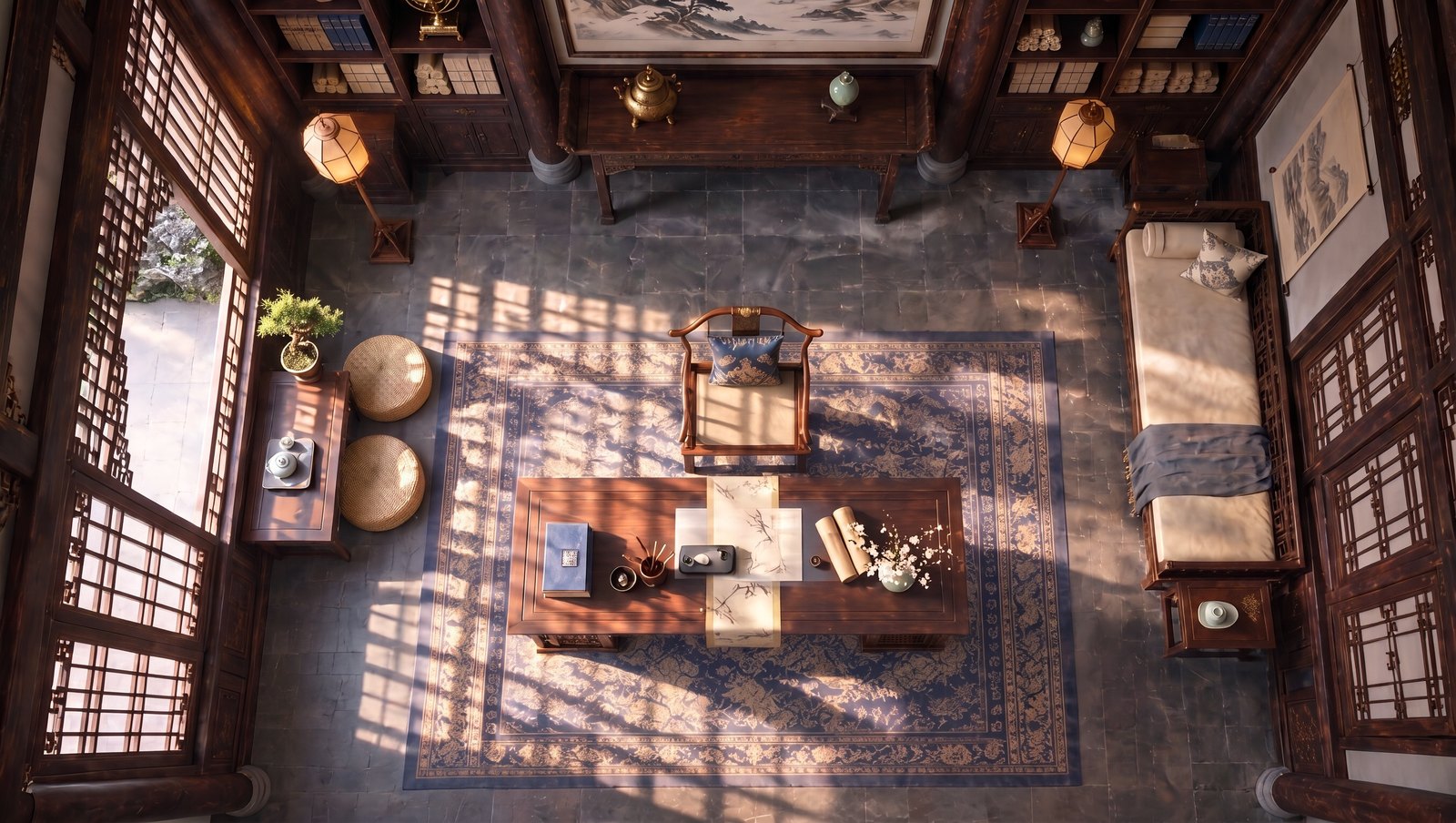
正上方往下看:长案和香炉、两盏宫灯在上,格窗庭院和茶几盆景两个蒲团在左,罗汉床小几在右,地毯和书案在中间,椅子在书案上方、桌旗垂向下方;桌上从左到右书、笔筒、砚台、卷轴、青瓷瓶,和原图一致;窗格光斑从左边洒进来。
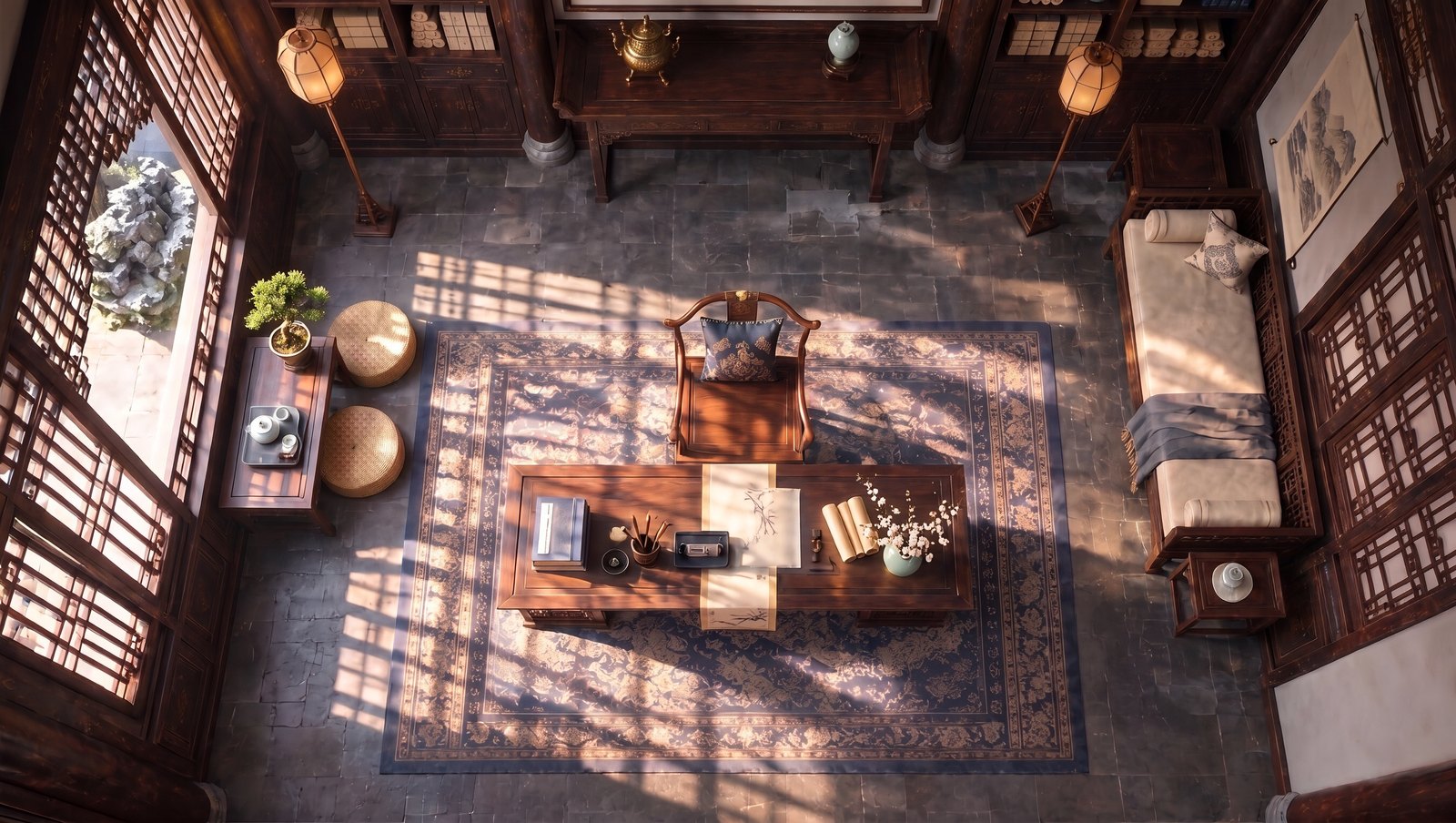
同上。
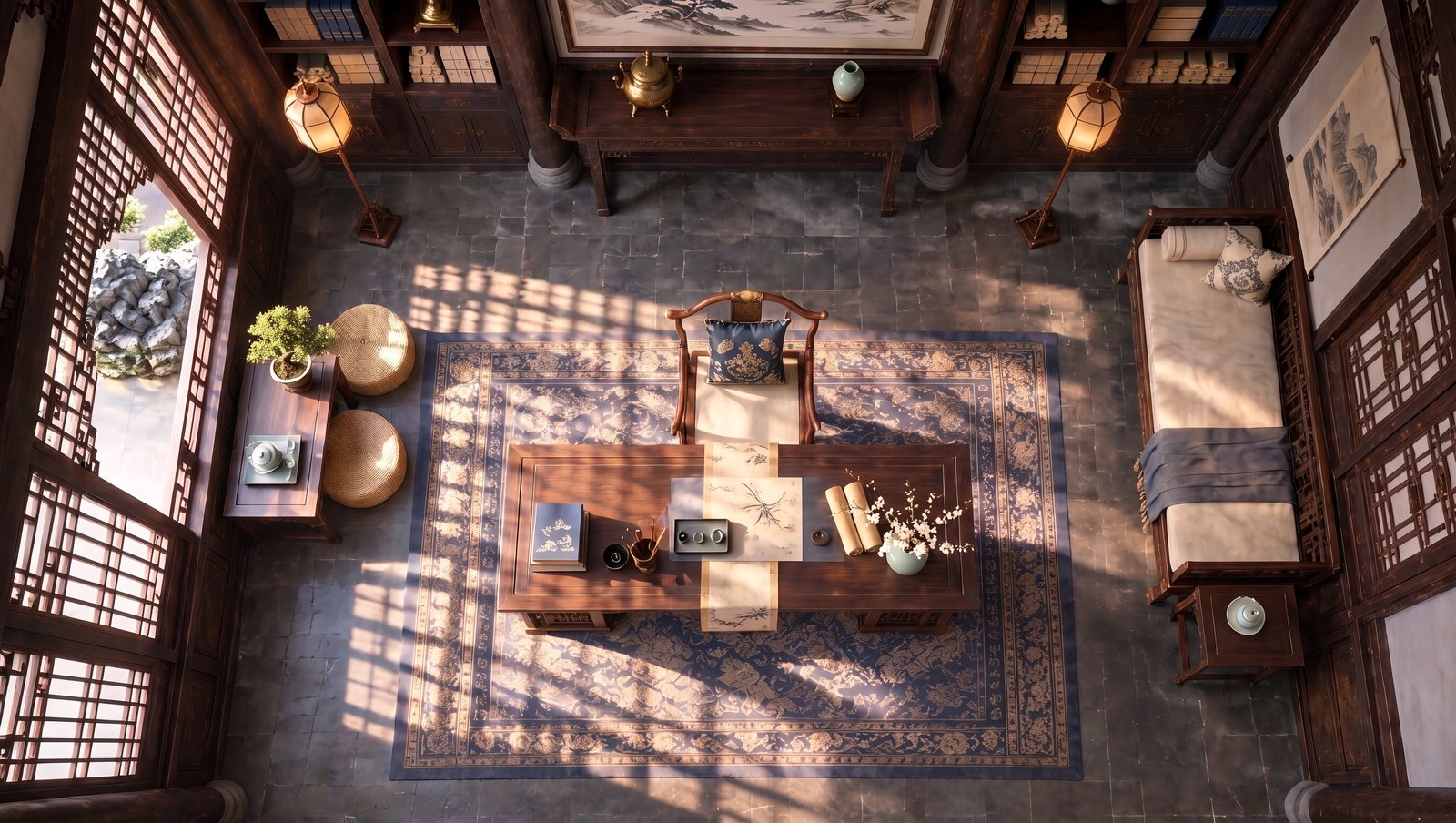
同上。
Qwen-Image-2.1,3 个种子
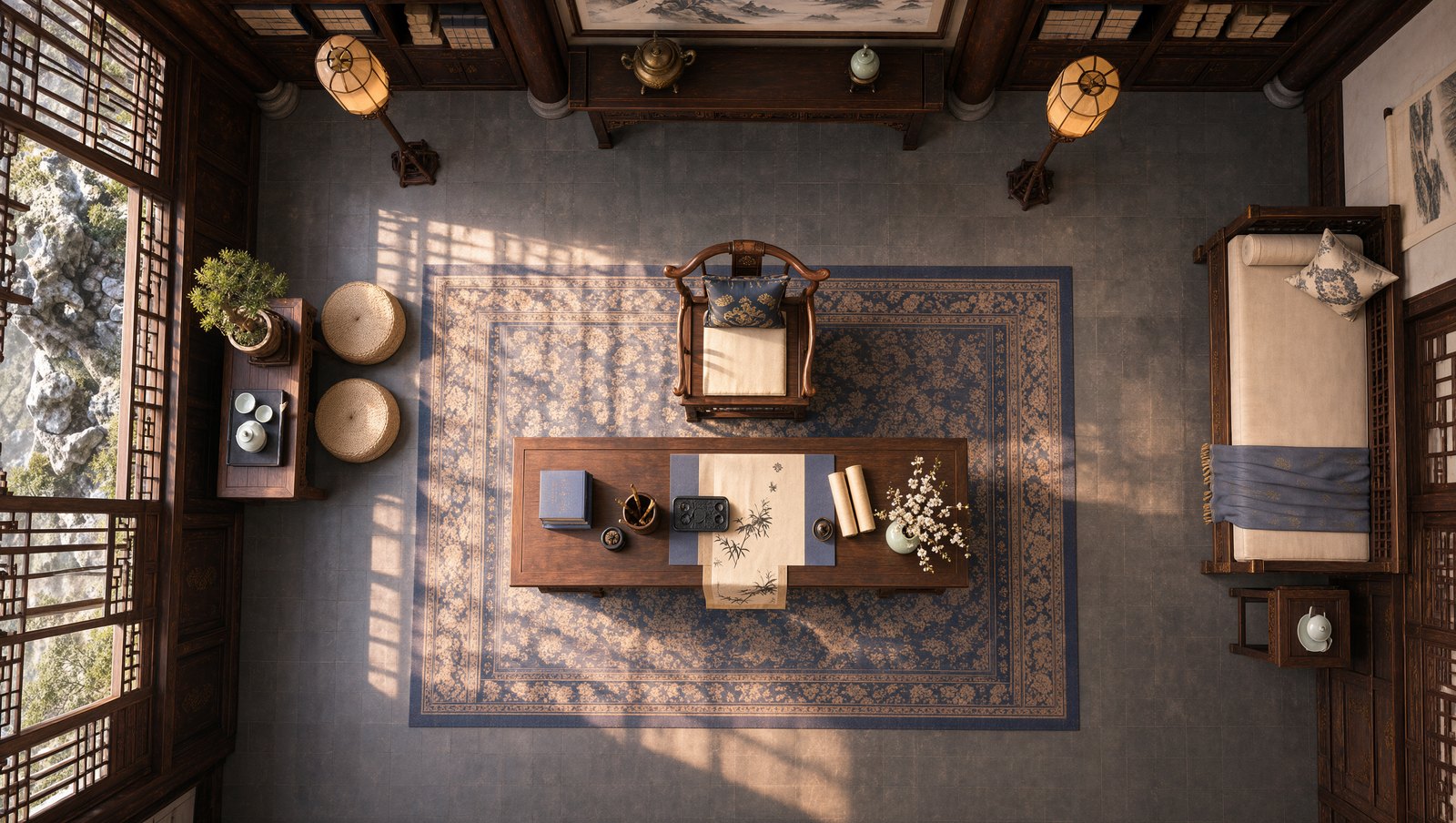
同上,光斑比 H3 弱。
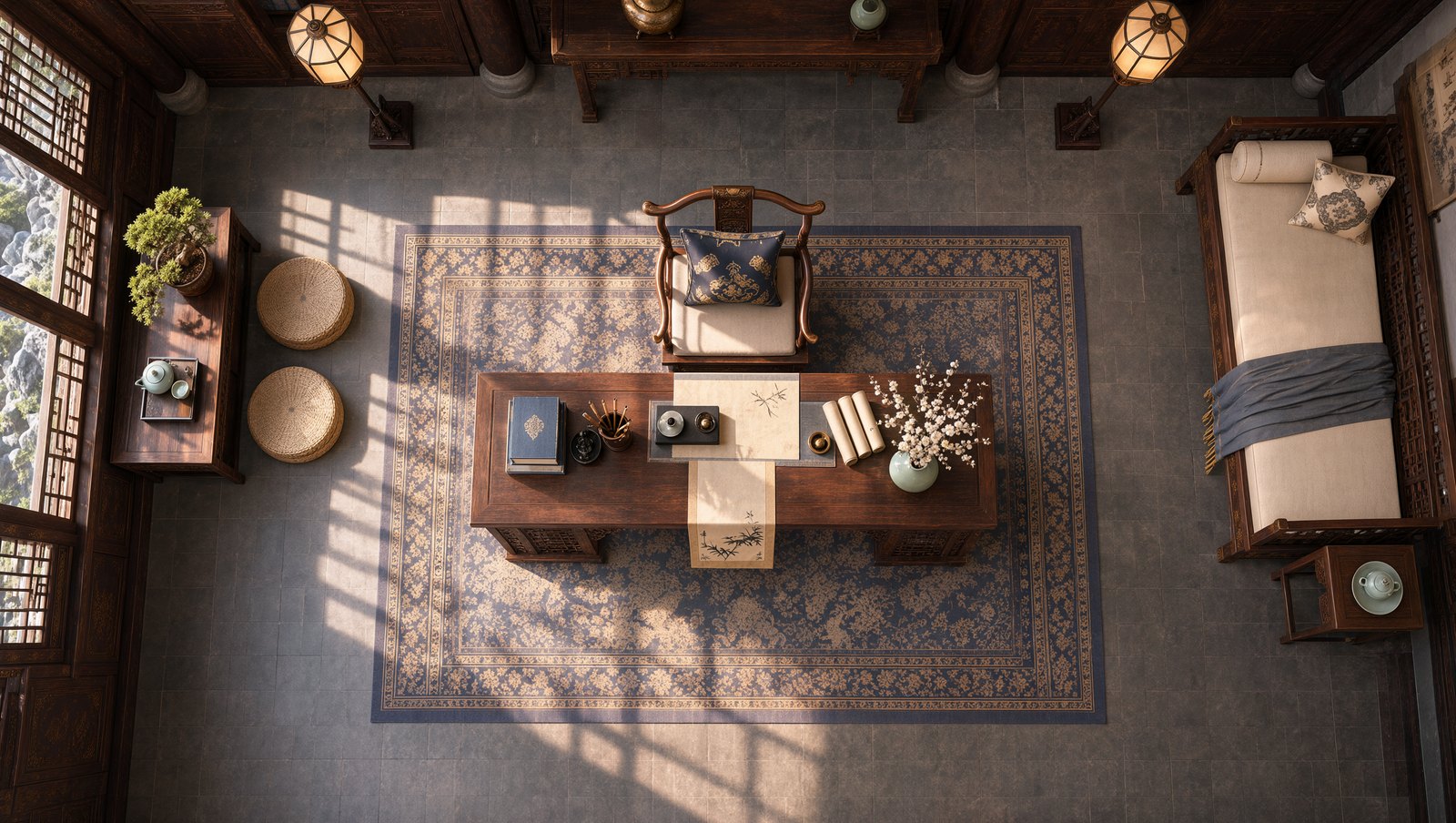
同上。
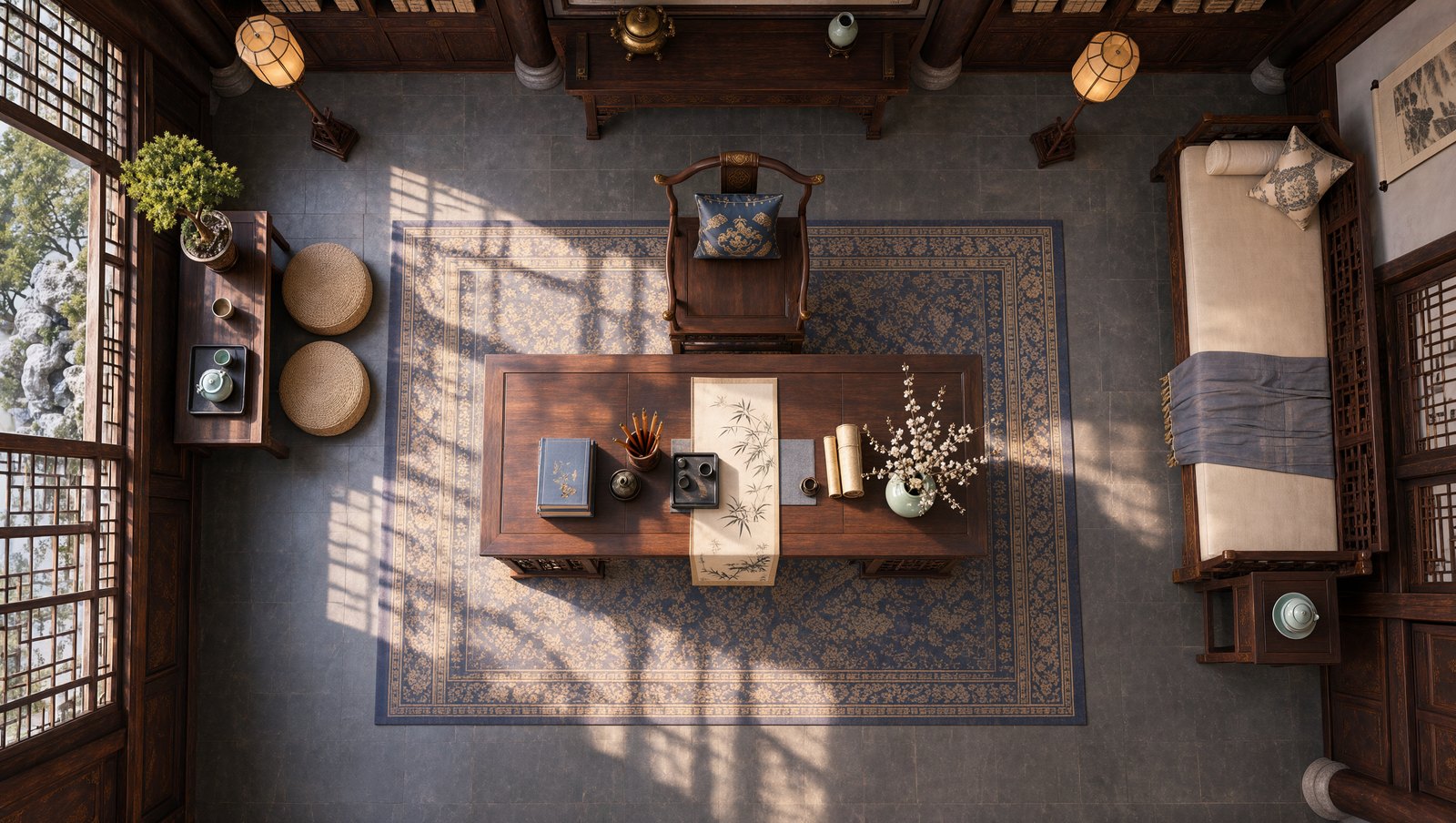
同上。
全部打分
| 视角 | 模型 | 种子 | 视角 | 方位 | 道具 | 和参考图相关度 | 分 |
|---|---|---|---|---|---|---|---|
| 前视 | H3-Image | 1 | 做到 | 对 | 19/19 | 0.88 | 5 |
| 前视 | H3-Image | 2 | 部分 | 对 | 19/19 | 0.98 | 5 |
| 前视 | H3-Image | 3 | 做到 | 对 | 19/19 | 0.89 | 5 |
| 前视 | Qwen-Image-2.1 | 1 | 做到 | 对 | 19/19 | 0.8 | 5 |
| 前视 | Qwen-Image-2.1 | 2 | 做到 | 对 | 19/19 | 0.9 | 5 |
| 前视 | Qwen-Image-2.1 | 3 | 做到 | 对 | 19/19 | 0.42 | 5 |
| 后视 | H3-Image | 1 | 做到 | 对 | 13.5/14 | 0.11 | 4 |
| 后视 | H3-Image | 2 | 做到 | 对 | 14/14 | 0.12 | 5 |
| 后视 | H3-Image | 3 | 做到 | 对 | 13.5/14 | 0.09 | 4 |
| 后视 | Qwen-Image-2.1 | 1 | 做到 | 对 | 13.5/14 | 0.07 | 4 |
| 后视 | Qwen-Image-2.1 | 2 | 做到 | 对 | 13.5/14 | 0.1 | 4 |
| 后视 | Qwen-Image-2.1 | 3 | 做到 | 部分 | 13.5/14 | 0.07 | 3 |
| 左视 | H3-Image | 1 | 做到 | 对 | 14/14 | 0.15 | 5 |
| 左视 | H3-Image | 2 | 做到 | 对 | 14/14 | 0.1 | 5 |
| 左视 | H3-Image | 3 | 做到 | 对 | 14/14 | 0.22 | 5 |
| 左视 | Qwen-Image-2.1 | 1 | 没做到 | 错 | 13.5/14 | 0.24 | 2 |
| 左视 | Qwen-Image-2.1 | 2 | 部分 | 部分 | 13.5/14 | 0.58 | 3 |
| 左视 | Qwen-Image-2.1 | 3 | 部分 | 部分 | 13.5/14 | 0.16 | 3 |
| 右视 | H3-Image | 1 | 做到 | 对 | 13/13 | 0.23 | 5 |
| 右视 | H3-Image | 2 | 做到 | 对 | 13/13 | 0.1 | 5 |
| 右视 | H3-Image | 3 | 做到 | 对 | 13/13 | 0.1 | 5 |
| 右视 | Qwen-Image-2.1 | 1 | 做到 | 对 | 13/13 | 0.17 | 5 |
| 右视 | Qwen-Image-2.1 | 2 | 做到 | 对 | 13/13 | 0.12 | 5 |
| 右视 | Qwen-Image-2.1 | 3 | 做到 | 错 | 12.5/13 | 0.04 | 3 |
| 垂直俯视 | H3-Image | 1 | 做到 | 对 | 16/16 | 0.11 | 5 |
| 垂直俯视 | H3-Image | 2 | 做到 | 对 | 16/16 | 0.09 | 5 |
| 垂直俯视 | H3-Image | 3 | 做到 | 对 | 16/16 | 0.09 | 5 |
| 垂直俯视 | Qwen-Image-2.1 | 1 | 做到 | 对 | 16/16 | 0.09 | 5 |
| 垂直俯视 | Qwen-Image-2.1 | 2 | 做到 | 对 | 16/16 | 0.1 | 5 |
| 垂直俯视 | Qwen-Image-2.1 | 3 | 做到 | 对 | 16/16 | 0.04 | 5 |
| 合计 | H3 14/15 Qwen 12/15 | H3 15/15 Qwen 10/15 |
H3 99.5% Qwen 98.3% | H3 73 Qwen 62 | |||
同一个视角,3 个种子之间有多像
缩小到 680×384 灰度图后两两算像素相关度,再取平均。越高说明换种子结果越稳定。H3 在前视和后视上明显更稳定。左右侧视两个模型都在 0.24~0.42,构图本来就会变。
| 视角 | H3-Image | Qwen-Image-2.1 |
|---|---|---|
| 前视 | 0.93 | 0.58 |
| 后视 | 0.73 | 0.61 |
| 左视 | 0.24 | 0.26 |
| 右视 | 0.38 | 0.42 |
| 垂直俯视 | 0.53 | 0.47 |
提示词
前视
The target image is a front view of the same traditional Chinese study as in <Picture 1>. The camera stands at the middle of the front (south) side of the room at standing eye level and looks straight ahead at the back wall, perfectly centred and level, with a slightly wider lens than <Picture 1>, so that the whole room is visible from the left window wall to the right wall, from the floor to the ceiling beams.

Everything is in the same place as in <Picture 1>: the bookshelves and the large framed landscape painting on the back wall, the console table under the painting, the two standing lanterns, the carved desk in the middle with the chair behind it and the painted runner hanging over its front, the objects on the desk, the tea table with the bonsai and the two straw cushions by the lattice window on the left, the daybed and the small side table on the right, the hanging scroll on the right wall, and the rug on the stone floor.

Every piece of furniture, every object, every material and colour is exactly the same as in <Picture 1>. Same warm afternoon sunlight from the window on the left, casting lattice shadows across the rug, same photorealistic style. No people.
后视
The target image is a back view of the same traditional Chinese study as in <Picture 1>: the camera has turned around 180 degrees. It now stands near the back wall, behind the chair, at standing eye level, and looks toward the front (south) side of the room, the side that is not visible in <Picture 1>.

Because the view is reversed, the lattice window wall with the courtyard, the tea table with the bonsai and the two straw cushions are now on the right side of the frame, and the daybed with its small side table and the hanging scroll are now on the left. In the foreground: the back of the chair with its cushion, and the desk seen from behind, with the same objects on it in reversed order. The rug continues toward the front of the room. The front wall in the background has the same dark carved wood, columns and lattice panels as the rest of the room, with a doorway in the middle.

Every piece of furniture, every object, every material and colour is exactly the same as in <Picture 1>. Same warm afternoon sunlight, now coming from the window on the right, same photorealistic style. No people.
左视
The target image is a left side view of the same traditional Chinese study as in <Picture 1>. The camera stands on the left (west) side of the room, in front of the lattice window wall, at standing eye level, and looks across the room toward the right wall.

The right wall now faces the camera: the daybed with its cushions and throw, the small side table, the hanging scroll and the lattice window on that wall fill the far side of the frame. The back wall with the bookshelves, the painting and the lanterns is now at the left edge of the frame, and the front of the room is at the right edge. In the middle, the carved desk is seen from its side, with the chair on the left side of the desk (toward the back wall) and the painted runner hanging on the right side (toward the front). The rug lies under the desk, and the sunlight from the window behind the camera falls across the floor toward the daybed.

Every piece of furniture, every object, every material and colour is exactly the same as in <Picture 1>. Same warm afternoon light, same photorealistic style. No people.
右视
The target image is a right side view of the same traditional Chinese study as in <Picture 1>. The camera stands on the right (east) side of the room, beside the daybed, at standing eye level, and looks across the room toward the left wall.

The lattice window wall now faces the camera, with the courtyard, the pine tree and the rockery visible through it, and the tea table with the bonsai and the two straw cushions in front of it. The back wall with the bookshelves, the painting and the lanterns is now at the right edge of the frame, and the front of the room is at the left edge. In the middle, the carved desk is seen from its side, with the chair on the right side of the desk (toward the back wall) and the painted runner hanging on the left side (toward the front). The rug lies under the desk, and warm sunlight comes through the window toward the camera.

Every piece of furniture, every object, every material and colour is exactly the same as in <Picture 1>. Same photorealistic style. No people.
垂直俯视
The target image is a vertical top-down view of the same traditional Chinese study as in <Picture 1>, as if the ceiling were removed: the camera is high above the middle of the room and looks straight down at the floor, so the whole floor plan of the room is visible.

The back wall with the bookshelves and the console table runs along the top edge of the frame, with the two lanterns standing near it. The lattice window wall is along the left edge, with the tea table, the bonsai and the two round straw cushions next to it. The daybed and the small side table are along the right edge. In the centre, the large rug, and on it the carved desk seen from directly above, with the chair on its upper side (toward the back wall) and the painted runner hanging over its lower side; the objects on the desk are seen from above. Sunlight from the window on the left falls across the floor in lattice-shaped patches.

Every piece of furniture, every object, every material and colour is exactly the same as in <Picture 1>. Same photorealistic style. No people.
环境
- 硬件:一张 H100 NVL 96 GB。
- ComfyUI 0.45.0:这个版本才支持 H3-Image(PR 17655,11-10 发布),没装插件。
- 权重:都是 Comfy-Org 打包的官方版,SHA256 和 HF 一致。
- H3-Image:Comfy-Org/MiniMax-H3-Image@892de7cb,int8 convrot DiT(21 GB)、fp16 VAE、int8 文字编码器
qwen3vl_32b_minimax_h3_int8_convrot。 - Qwen:Comfy-Org/Qwen-Image-2.1@aacf31a6,
qwen_image_2.1_int8_convrot、qwen3vl_8b_int8_convrot。
- H3-Image:Comfy-Org/MiniMax-H3-Image@892de7cb,int8 convrot DiT(21 GB)、fp16 VAE、int8 文字编码器
- 参数:照 ComfyUI 官方编辑模板,不开提示词扩写。
- H3-Image:
MiniMaxH3ImageConditioning(参考图 image_1,接 VAE)→ 6 步、cfg 1、euler / simple。 - Qwen:
TextEncodeQwenImage21(resolution 0)+QwenImage21Cache→ 25 步、cfg 1、euler / simple。
- H3-Image: